If Sri Lanka were a functioning republic, the absence of an Auditor General for nearly a month would be a constitutional scandal. Instead, it has taken a personal phone call from the President to an opposition MP to confirm what everyone already knew: the system is stalled, the Constitution is waiting, and accountability is on hold.
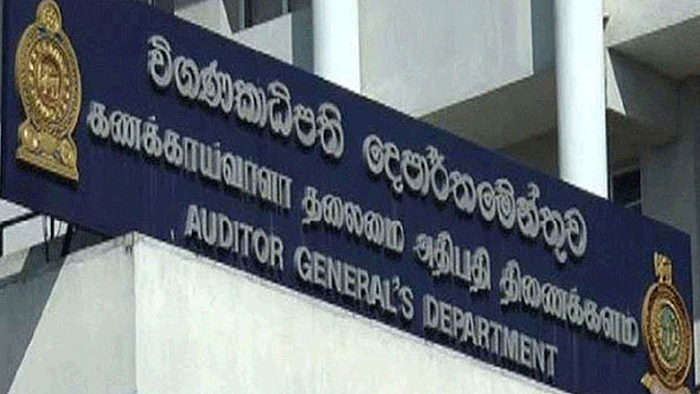
Chairman of the Committee on Public Finance, Dr. Harsha de Silva, told Parliament that President Anura Kumara Dissanayake personally rang him after receiving a formal letter pointing out the obvious — that Sri Lanka has been without an Auditor General since 7 December, and that this is not a decorative post one can leave vacant while disasters unfold.
According to Dr. de Silva, the President’s call was cordial, concerned, and revealing. The President, having already sent names to the Constitutional Council, asked whether Dr. de Silva could “intervene” to help move the process along. Translation: the executive has done its part, the Council has not, and the Constitution is caught in the middle like an unacknowledged email.
Dr. de Silva reminded the House — and by extension the country — that constitutional governance is not a relay race where institutions wait for one another to blink first. Both the President and the Constitutional Council, he stressed, must act together and strictly within the framework of the Constitution. Deadlock, he warned, is not neutrality; it is abdication.
adding a further layer of procedural absurdity, Dr. de Silva disclosed that the Speaker had blocked the circulation of his letter to members of the Constitutional Council — without explanation or authority. The letter, inconvenient though it may have been, was subsequently tabled in Parliament, where inconvenient truths are at least supposed to be allowed to breathe.
The substance of the letter was blunt. Without an Auditor General, Articles 148 and 154 of the Constitution — which give Parliament control over public finance — are effectively suspended. Oversight bodies such as Committee on Public Accounts and Committee on Public Enterprises are operating half-blind, at a time when public spending is anything but routine.
This is not a theoretical concern. Sri Lanka is in the midst of disaster response and recovery following Cyclone Ditwah. Large sums are being spent. Emergency procurement is underway. A “Rebuilding Sri Lanka” fund is being discussed — not yet legally established, but already politically invoked. And the constitutional officer tasked with auditing all of this is, quite literally, missing.
In a public post on X, Dr. de Silva put it plainly: at this moment of heightened financial risk, Sri Lanka is operating without its Chief Auditor. That is not reform. It is exposure.
The irony is hard to miss. A government elected on a platform of accountability is now presiding over a vacuum at the very heart of financial oversight. The President has picked up the phone. Parliament has raised the alarm. What remains is for the system — specifically the Constitutional Council — to do its job.
Until then, Sri Lanka’s public finances are running on trust, improvisation, and crossed fingers. None of which appear anywhere in the Constitution.