Maduro Extradited — Now What?
By Faraz Shauketaly
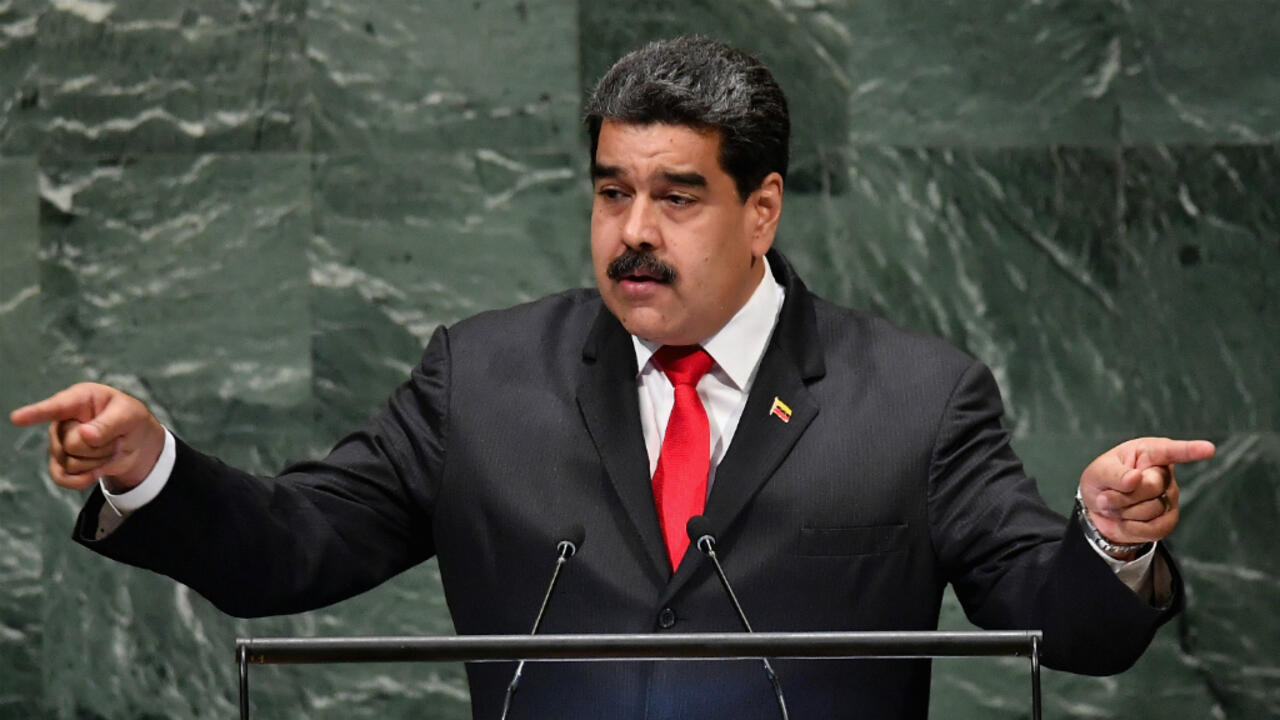
The United States says it has done what years of diplomacy, sanctions, legal cases, and political pressure could not: it captured and extradited Venezuelan President Nicolás Maduro to face criminal prosecution on U.S. soil. What was once a theoretical outcome — formal accountability for alleged narco-terrorism and drug trafficking — unfolded not through negotiation or extradition treaty, but through military force and extraordinary executive action.
In Washington on Saturday, U.S. President Donald Trump announced Maduro and his wife, Cilia Flores, were seized in a large-scale strike and transported to the United States to face charges that have loomed against him for years. U.S. authorities brought multiple indictments in New York related to drug trafficking, narcotics distribution, and narco-terrorism.
The operation — reportedly involving U.S. forces inside Venezuela — has immediately ignited fierce debate: about legality, about regional stability, and about the use of force under the banner of “justice.” It is one thing to pursue an international warrant. It is another to effect a de facto regime change by military means.
The Headlines Don’t Capture the Full Story
On the surface, the U.S. announcement is simple: Maduro is in U.S. custody, awaiting trial. Former Venezuelan intelligence chief, members of the Cartel of the Suns, and political allies have been accused of coordinating drug flows into the United States. The reward for information leading to his arrest had risen as high as $50 million — the largest ever offered for a sitting head of state — before this operation.
But what unfolded over the weekend is anything but simple.
Across Latin America, reactions are deeply divided:
Support from some quarters: Argentina’s President Javier Milei called the capture a “victory for freedom,” while Venezuelan opposition figures celebrated the moment as a potential turning point.
Condemnation elsewhere: Leaders from Brazil, Mexico, China, and Russia condemned the U.S. operation as a blatant breach of sovereignty and international law.
Regional uncertainty: Venezuela’s Supreme Court named Vice President Delcy Rodríguez as interim president to maintain continuity, even as Caracas’s government denounced the operation.
Australia and other nations called for a peaceful, lawful transition and respect for international norms, signalling widespread diplomatic unease.
Legal Questions, Not Just Political Ones
What has just happened raises fundamental legal puzzles.
There is no formal extradition treaty between the U.S. and Venezuela. The seizure of a sitting (if widely contested) head of state — by force — pushes beyond routine law enforcement into a zone traditionally reserved for war, diplomacy, or extreme international consensus. Legal scholars are already questioning whether U.S. action contravenes international law and norms on state sovereignty.
Yet U.S. legal experts also note a practical consequence: even if Maduro’s capture was outside normal extradition procedures, it may not block prosecution in U.S. courts. Federal case law generally holds that courts can hear criminal charges even if a defendant was brought into the jurisdiction irregularly.
For Maduro himself — long indicted in the Southern District of New York — this means that his legal defence will play out against a backdrop of political controversy and procedural complexity, not merely a straightforward narcotics case.
What This Means for Venezuela
On the ground in Caracas and across Venezuela, the picture is mixed and tense:
1. Dual Narrows of Power
While the U.S. calls Maduro in custody, loyalist institutions in Caracas are rejecting that narrative. Rodríguez and other regime figures insist Maduro remains the legitimate president in absentia. This dual narrative sets up parallel claims to authority — one domestic, one international.
2. Governance Vacuum Risks
Even if Rodríguez functions as interim president, the deeper question is legitimacy. A portion of Venezuela’s political class and the opposition see the U.S. action as undermining Venezuelan sovereignty. Others see it as overdue accountability. The divide complicates not just governance but the ability to manage oil revenues, public services, and social cohesion.
3. Opposition Prospects
Opposition leaders, long fractured, now face a strategic crossroads. Some celebrate Maduro’s removal as vindication; others warn that external imposition of change is not a substitute for genuine political transition.
Regional Stability at Stake
Latin America is acutely sensitive to foreign intervention. For decades, U.S. actions in the hemisphere have been viewed through a historical prism that includes Cold War interventions and regime changes. Current developments evoke deep unease among neighboring states worried about escalation or spillover.
International actors have responded sharply:
China has labelled the capture an unacceptable violation of sovereignty and demanded Maduro’s release.
Turkey urged restraint and called for all parties to respect international law and avoid further destabilisation.
The European Union has emphasised respect for international norms even as it acknowledges wider concerns about Maduro’s democratic legitimacy.
These reactions foreshadow a multipolar diplomatic contest over the future of Venezuela — with direct implications for regional security, energy markets, and global alignments.
So What Comes Next?
1. U.S. Prosecution, Regardless of Legality Debate
Experts predict that Maduro’s prosecution in Manhattan will proceed, given legal precedents that courts can assert jurisdiction even in cases of irregular capture.
2. Venezuelan Political Contestation
Inside Venezuela, the interim leadership structure is likely to face continuing resistance from regime loyalists and competing opposition factions alike. The legitimacy of any government — even transitional — will remain contested.
3. Diplomatic Friction Across Continents
Expect sustained pushback from countries alarmed by U.S. military action. Latin American regional bodies, the UN Security Council, and human-rights organisations will be arenas for heavyweight diplomatic battles over sovereignty and intervention.
4. Oil, Power, and Reconstruction
Venezuela sits atop some of the largest proven oil reserves in the world. Control of those resources — and the future of foreign investment in them — will be central to Venezuela’s economic reconstruction or continued fragmentation.
The Faraz Perspective
The capture and extradition of Nicolás Maduro represents more than a headline. It lays bare a fault line in global politics:
Is international accountability enforceable through law, or will the exercise of power redefine the rules?
What happens next — in courtrooms, in Caracas, and across capitals from Beijing to Buenos Aires — will shape not just Venezuela’s future but the contours of sovereignty, intervention, and justice in the 21st century.