Sri Lanka does not have a drug problem. It has a drug accommodation problem.
That distinction matters — because problems are solved, while accommodations are managed, normalised, and quietly absorbed into daily life. And that is exactly what has happened.
This Is No Longer a “Menace.” It Is a Market.
When drugs were once spoken of as a “social menace,” they were marginal — hidden, feared, exceptional. Today, controlled substances in Sri Lanka are predictable, available, and priced.
That is not the language of crisis. That is the language of a functioning market.
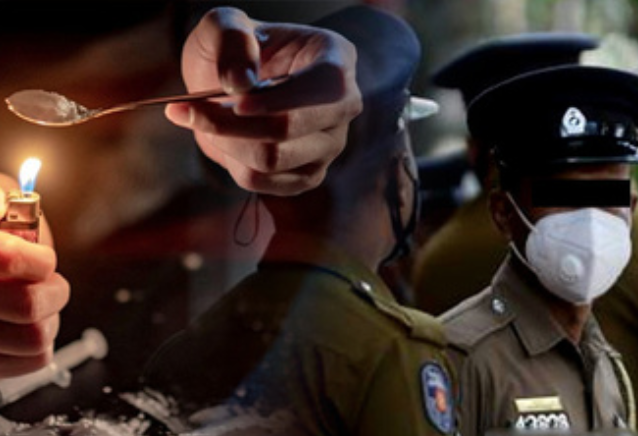
Heroin, methamphetamine, pharmaceutical abuse, synthetic stimulants — these are no longer confined to shadowy underworlds.
You do not reach this stage by accident. You reach it through institutional fatigue.
Seizures Are Not Proof of Success — They Are Evidence of Scale
Every large seizure announced with theatrical flair raises the same unasked question:
How much wasn’t caught?
You do not repeatedly intercept multi-kilogram consignments unless the supply chain is robust, well- financed, and protected by predictability. Cartels do not gamble. They calculate.And Sri Lanka, with its maritime geography, administrative weaknesses, and selective enforcement culture, has become a low-risk transit and consumption zone.
The State celebrates interceptions. The networks absorb losses and adjust.
That is not disruption. That is cost of business.
The Lie at the Heart of Enforcement
Sri Lanka’s drug response rests on a convenient fiction: that arresting enough people equals progress.
It does not.
Most arrests target: users
couriers
street-level distributors
They are expendable. They are replaceable. They are visible — which is why they are useful.
What remains largely untouched are:
financiers
logistics coordinators asset flows protection structures
A system that arrests bodies but ignores money is not fighting drugs. It is managing optics.
Prison: Where Addiction Goes to Multiply
Sri Lanka treats addiction as criminal deviance and then expresses surprise when prisons become incubators rather than solutions.
Overcrowded prisons, limited rehabilitation, weak post-release support — this is not deterrence. It is recirculation.
Addicts enter broken. They leave connected.
If this were a private enterprise, we would call it a failed model. In public policy, we call it “law and order.”
The Synthetic Time Bomb
The most dangerous phase is not what we see — it is what we are unprepared for.
Synthetic drugs change everything: cheaper production
smaller volumes
faster addiction
harder detection
They do not depend on crops, seasons, or borders. They depend on chemistry and distribution — both of which move faster than Sri Lanka’s institutions.
When synthetics take hold, seizures become almost irrelevant. The damage is already done by the time the State notices.
The Political Cowardice Problem
Politicians love the vocabulary of war: “Crackdown.” “Zero tolerance.” “Eradication.”
Wars require strategy. Sri Lanka has slogans.
A serious response would require:
financial crime enforcement
asset forfeiture at scale
transparent data on addiction treatment-led policy
accountability within enforcement agencies
These steps are politically inconvenient. They disrupt patronage, expose collusion, and remove the comfort of denial.
So they are postponed.
The Middle-Class Illusion Is Cracking
For years, drugs were framed as “someone else’s problem.”
The poor. The urban fringe. The reckless youth.
That illusion is gone.
Addiction now cuts across income, profession, and geography. It appears in families that once believed they were immune. Quietly. Embarrassingly. Without warning.
When a problem crosses class lines, it is no longer marginal.
It is structural.
Are We a Narco-State? Not yet.
But we are something more insidious: a narco- tolerant state — where drugs are neither accepted nor effectively opposed; where enforcement is performative, policy is timid, and denial is national habit.
This is how decline happens — not with collapse, but with accommodation.
The Choice Sri Lanka Refuses to Make Sri Lanka can continue:
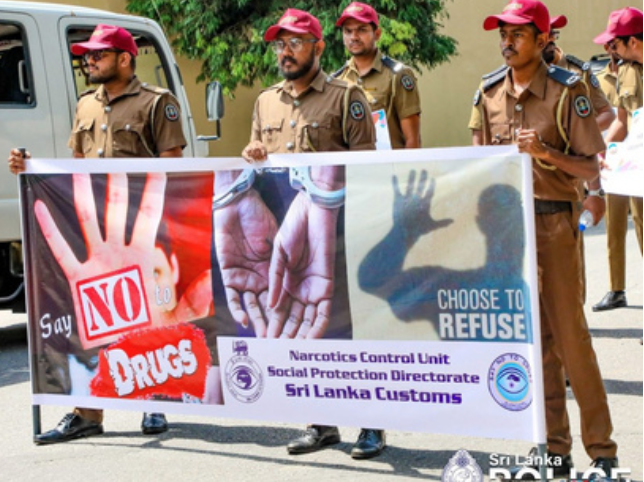
staging raids
counting packets
filling prisons
and congratulating itself
Or it can admit the truth:
This is no longer just a policing issue.
It is a public health failure, an economic vulnerability, and a governance crisis.
The drug problem is serious.
What is lethal is the pretence that seriousness alone equals action.
History will not judge Sri Lanka on how many seizures it announced —
but on how long it chose comfort over courage.
And the clock is no longer generous.