This is no longer about territory – it is about survival of supply.
Today’s developments confirm what many analysts feared: the Middle East conflict has entered a new and more dangerous phase, where energy infrastructure is no longer collateral – it is the primary target.
The strike on Qatar’s LNG facility follows closely on the heels of Israel’s attack on Iran’s South Pars gas field, effectively turning the region’s vast energy reserves into a battlefield.
This escalation is strategic.
By targeting energy assets, both sides are seeking to exert pressure not just on each other, but on the global economy itself.
Qatar’s Ras Laffan complex is central to this equation. Its disruption threatens supply chains across Europe and Asia, particularly at a time when alternatives are limited and demand remains high.
Be that as it may, the consequences extend beyond markets.
There is now a real risk that neighbouring states – Saudi Arabia, the UAE, Kuwait – may be drawn further into the conflict, either through direct attacks or defensive responses.
Already, missile interceptions, drone strikes and shutdowns of key facilities suggest a region on edge, where escalation could become self-sustaining.
For smaller economies like Sri Lanka, the implications are immediate.
Higher fuel costs, disrupted supply routes and economic uncertainty are no longer theoretical risks – they are unfolding realities.
The world is watching, but perhaps more importantly, the world is now exposed.
GULF INFRASTRUCTURE UNDER SYSTEMATIC ATTACK
From Qatar to Kuwait – the Gulf’s energy spine is under fire.
The attack on Qatar’s LNG hub is not an isolated incident. It is part of a coordinated escalation across the Gulf, with multiple energy installations coming under fire within hours.
Reports confirm that:
• Saudi Arabia’s Yanbu refinery was struck by drone attacks
• Kuwait’s major refineries at Mina al-Ahmadi and Mina Abdullah were targeted
• The UAE suspended operations at key gas facilities after missile interceptions
This is no longer a conflict confined to borders. It is an energy war, targeting the infrastructure that powers the global economy.
The sequence is telling. Israel’s strike on Iran’s South Pars gas field – the largest in the world – appears to have triggered a calculated Iranian response aimed not at military bases alone, but at the economic lifelines of its regional rivals.
Be that as it may, the implications are profound. The Gulf region supplies a significant portion of the world’s oil and gas. Disruption at multiple nodes simultaneously introduces a level of systemic risk rarely seen outside full- scale war.
LNG IN FLAMES: QATAR STRIKE SHOCKS GLOBAL ENERGY MARKETS
The world’s gas heart has been hit – and the tremors are global.
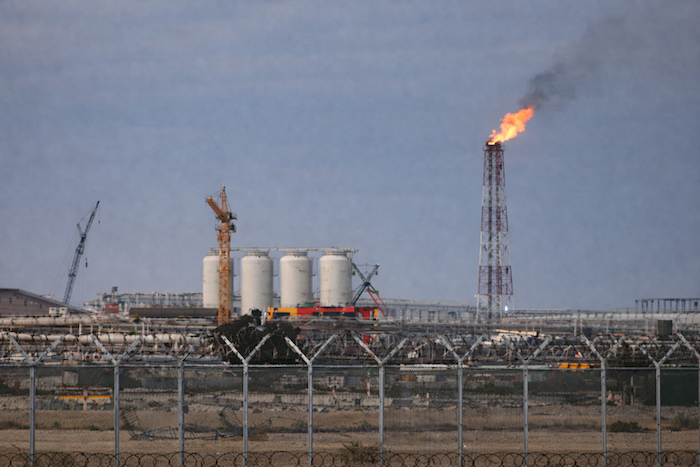
In a dramatic escalation of the Middle East conflict, missile strikes have hit Qatar’s Ras Laffan Industrial City – home to the world’s largest liquefied natural gas facility – sending shockwaves through global energy markets and raising fears of a prolonged supply crisis.
According to multiple international reports, including Financial Times and Reuters, Iranian missiles targeted the complex in retaliation for earlier strikes on Iran’s South Pars gas field. One missile is reported to have struck the facility directly, igniting fires and causing what authorities described as “extensive damage.”
Ras Laffan is not just another industrial site. It is responsible for roughly 20% of global LNG supply, feeding markets across Asia and Europe. Any sustained disruption has immediate consequences – not just for energy prices, but for inflation, industry and economic stability worldwide.
Be that as it may, the symbolism of the attack may prove just as significant as the physical damage. This marks a clear shift in the conflict – from military targets to economic infrastructure, signalling that energy itself is now a weapon.
Qatar has condemned the strike as a violation of sovereignty and expelled Iranian military attaches, while global markets reacted swiftly, with oil and gas prices spiking sharply.
The question now is not whether markets will react – they already have – but whether this represents a one-off escalation or the beginning of a sustained campaign against global energy arteries.