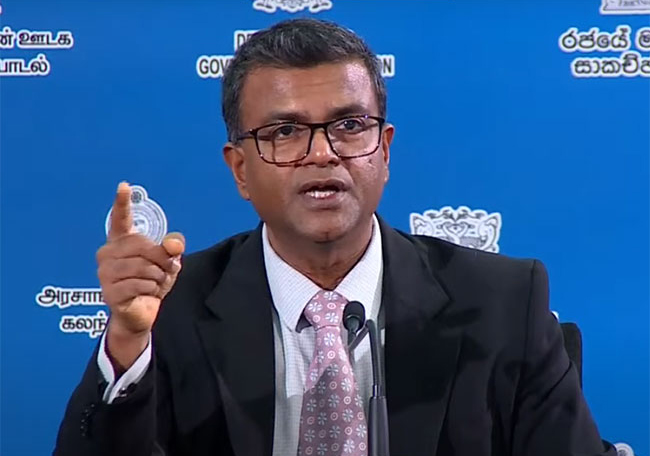
Sri Lanka is poised to finalize its external debt restructuring and secure the next tranche of International Monetary Fund (IMF) funding, as reported by Treasury Secretary Dr. Harshana Suriyapperuma during a briefing to International Sovereign Bond (ISB) holders. He emphasized the country’s improved macroeconomic stability and robust reform momentum under the IMF Extended Fund Facility (EFF).
Dr. Suriyapperuma highlighted that agreements have been reached with creditors representing nearly 99% of Sri Lanka’s external debt, with over 92% already restructured. Public debt is projected to decline significantly to around 105% of GDP by mid-2025, down from a peak of 145% in 2022. Despite the $4.1 billion damage caused by Cyclone Ditwah, recovery spending has been transparently integrated into the 2026 Budget without disrupting fiscal consolidation.
Addressing participants, Dr. Suriyapperuma outlined key highlights from the mid-2025 Public Debt Report, recent macroeconomic developments, and the progress of public sector reforms and debt restructuring. He also discussed the economic impact of Cyclone Ditwah and the ongoing policy response.
Cyclone Ditwah, recorded as one of the most destructive climate events in recent decades, struck in November 2025, affecting 20% of Sri Lanka’s landmass, displacing over 100,000 people, and causing substantial damage to infrastructure. Despite this, Sri Lanka’s macroeconomic foundation has remained resilient due to strengthened institutions and fiscal discipline under the EFF. Recovery spending has been incorporated into the 2026 Budget transparently, aligning with medium-term consolidation plans.
The new administration, elected at the end of 2024, continues to adhere to structural reforms, maintaining strong IMF program performance and progressing towards completing external debt restructuring. Participants were encouraged to submit questions, with responses to be published on the Finance Ministry website alongside presentation materials.
By the end of 2025, a staff-level agreement was reached on the IMF’s Fifth Review, with Board approval expected in early 2026 to assess the cyclone’s impact. The government anticipates completing the review and obtaining approval soon, potentially by March.
The IMF has noted the commendable outcomes of Sri Lanka’s ambitious reform agenda despite socio-economic disruptions and climate risks. The program remains on track to conclude in 2027, as initially planned. Upon completing the fifth Executive Board review, Sri Lanka will access an additional $350 million in IMF support, raising total disbursements under the arrangement to approximately $2 billion.
The cyclone’s recovery and reconstruction needs are estimated at $4.1 billion, with $1.62 billion required for 2026. These costs encompass sectors such as housing, transport, and health infrastructure, with the fiscal impact fully incorporated into the 2026 Budget.
Efforts have been made to maintain transparency by presenting cyclone-related allocations under dedicated budget lines and integrating reconstruction costs without compromising fiscal consolidation. Rapid support has been mobilized from development partners, including $206 million in emergency financing from the IMF and assistance from the World Bank. Bilateral partners and organizations have also contributed to stabilizing conditions post-disaster.
Reconstruction spending is expected to moderately boost domestic activity, similar to patterns observed after previous climate events. Tourism, temporarily disrupted in November 2025, rebounded strongly in early 2026, supported by resilient source markets such as India, the UK, and Russia.
Since the election, the new administration has focused on reforms aligned with the IMF program’s five pillars, emphasizing support for vulnerable populations and fostering private sector growth. Fiscal consolidation efforts continue, with revenue-based strategies and fiscal structural reforms advancing.
State-owned enterprise (SOE) reforms are progressing, particularly the unbundling of the CEB into specialized entities to improve governance and financial discipline. The public enterprise reform process is advancing, with international collaboration on governance frameworks and audit processes.
Sri Lanka’s public debt stock has significantly improved, decreasing from 145% of GDP in June 2022 to about 105% by mid-2025, attributed to external debt restructuring and economic performance. The composition of external debt is balanced across multilateral, bilateral, and commercial sources.
About 75% of external debt is contracted at fixed interest rates, limiting interest rate volatility. Currency exposure remains primarily in US dollars. Average interest rates are expected to decline as agreements are implemented, with debt restructuring nearing completion in alignment with IMF parameters.
Agreements have been reached with creditors representing nearly 99% of external debt, with more than 92% fully restructured. On the bilateral front, most eligible claims have been restructured, with ongoing discussions with a few non-OCC creditors.
Commercial debt restructuring was largely completed in December 2024, with Sri Lanka exchanging 98% of outstanding ISBs for new instruments. Agreements have been signed with nine OCC members covering $4.2 billion in claims. Additional agreements are pending formal signature.
Sri Lanka is on course to meet all IMF debt sustainability targets, with improved macroeconomic conditions bolstering debt indicators. The restructuring has restored access to external financing, with multilateral and bilateral disbursements resuming.
Following the international sovereign bond exchange in December 2024, Sri Lanka’s long-term issuer rating was upgraded to CCC+ by major rating agencies. The country has experienced nine consecutive quarters of positive real GDP growth, with the IMF projecting 4.2% growth for 2025. Despite cyclone-related adjustments, growth forecasts remain strong for 2025 and 2026.
Sri Lanka’s primary balance improved from a deficit of 3.7% of GDP in 2022 to a surplus of 3.8% in 2025. Easing vehicle import restrictions in 2025 generated substantial tax revenue, exceeding initial projections.
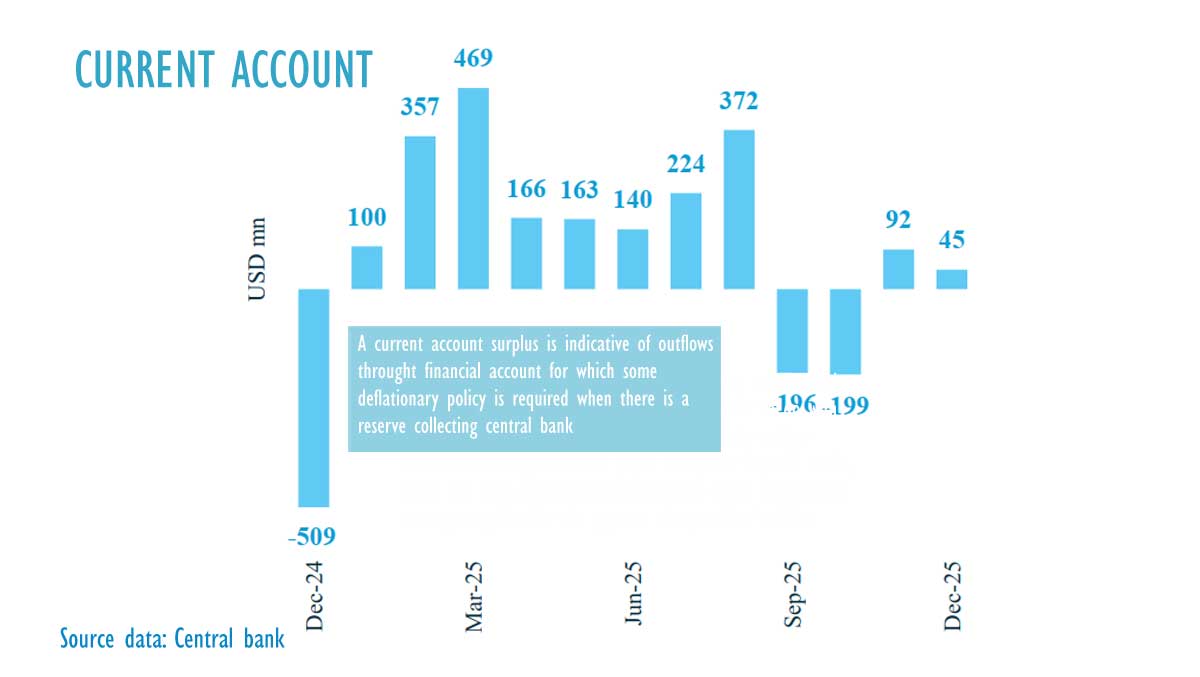
Foreign exchange reserves continue to increase, with the current account shifting from a $1.8 billion deficit in 2022 to a provisional $1.7 billion surplus in 2025. In conclusion, Sri Lanka remains committed to completing restructuring, implementing growth-enhancing reforms, and strengthening governance and transparency.