The investment landscape in Sri Lanka continues to pose challenges, even as the nation experiences economic recovery. According to the U.S. Department of State, foreign direct investment (FDI) inflows are still significantly lower than those typically found in emerging markets.
In the Department’s 2026 Investment Climate Statement concerning Sri Lanka, it was reported that FDI reached approximately US$1.06 billion in 2025, which corresponds to around 1% of the country’s GDP. This figure is notably less than the 3% to 4% of GDP that is generally observed in other emerging economies.
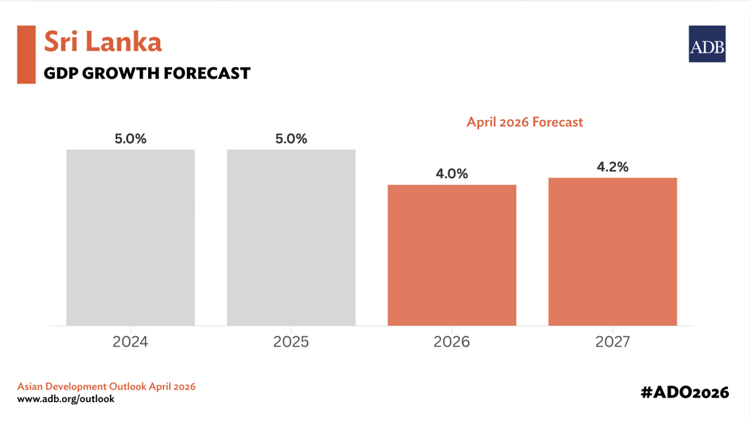
The statement highlighted that Sri Lanka achieved an economic growth rate of 5% in 2025, surpassing initial forecasts. Political developments following the late 2024 electoral victories of the National People’s Power (NPP) party have contributed to a more stable political environment.
Nevertheless, the report indicated that many investors remain hesitant, citing inconsistent signals regarding market accessibility, as well as ongoing worries about the stability of policies and the reliability of regulations.
While the NPP administration’s commitment to a US$3 billion IMF Extended Fund Facility (EFF) for the years 2023-2027 has provided some reassurance to investors, experts have pointed out the necessity for increased policy stability, regulatory reforms, a skilled workforce, and better access to industrial land.
Concerns have also been raised by investors regarding potential project cancellations, changes in regulations, sluggish decision-making processes, and insufficient governmental support. The IMF, along with local business organizations, has advocated for structural reforms aimed at enhancing trade facilitation, digitization, and governance.
The report underscored several significant investment initiatives that have experienced delays or modifications under the current government. For instance, in January 2025, the President announced a US$3.7 billion oil refinery project with Sinopec near Hambantota International Port; however, as of June 2026, the project was still pending due to disagreements with the Chinese firm.
Additionally, Adani Green Energy withdrew from a planned US$400 million, 484-megawatt wind power project in northern Sri Lanka in February 2025, citing the government’s attempts to renegotiate the existing contract.
Further, negotiations with China Harbour Engineering Company for a floating liquefied natural gas terminal were terminated in December 2025, just prior to the signing of the contract.
The current administration has also suspended several privatization initiatives launched by the previous government, opting instead for restructuring and management improvements. Some investors have expressed concerns about the conflicting messages from the government regarding the state’s role in the economy.
Sri Lanka continues to struggle with making the Board of Investment (BOI) an effective one-stop shop for investors, with many approvals necessitating coordination among various government bodies.
According to the report, foreign investors are still confronted with excessive regulations, legal ambiguities, slow bureaucratic processes, and elevated transaction costs. Inefficiencies within state-owned energy companies, particularly the Ceylon Electricity Board, have also been cited as factors hindering investment.
In May 2026, the government introduced the Ready to Invest platform to enhance the investment process.
The report also pointed out ongoing challenges related to labor regulations and a shortage of skilled workers. Stringent labor laws can complicate and escalate the costs associated with workforce reductions, while the exodus of skilled workers seeking employment abroad has emerged as a significant issue. For instance, the garment industry has reported employee turnover rates as high as 40%.
Moreover, foreign investors face restrictions on land ownership, with the general prohibition on selling land to foreigners and companies with over 50% foreign ownership, albeit with limited exceptions.
Despite these investment challenges, the report noted positive developments in Sri Lanka’s financial sector and external economic position.
The All Share Price Index (ASPI) of the Colombo Stock Exchange surged by 42% in 2025, while the S&P SL20 index rose by 27%. Market capitalization also grew by 42% during the same period.
Furthermore, the Central Bank of Sri Lanka acquired around US$2 billion in foreign exchange throughout 2025, contributing to an increase in gross official reserves to US$6.8 billion—the highest level since the economic crisis in 2022.
Worker remittances rose to US$8.1 billion in 2025, up from US$6.6 billion in 2024.
Additionally, the banking sector demonstrated robust performance, with after-tax profits increasing by 19% to approximately US$1.2 billion. Total banking assets also grew by 12%, reaching around US$80 billion, with all banks remaining compliant with minimum capital requirements.
The report concluded that while Sri Lanka has made strides in recovering from its economic crisis, attracting higher levels of foreign investment will require addressing ongoing structural and regulatory deficiencies. Key areas for improvement include establishing more predictable policies, streamlining approval processes, enhancing trade facilitation, strengthening governance, and increasing digitization.
Although the country’s financial stabilization has created a more favorable economic environment, the report emphasizes the importance of overcoming these long-term barriers to investment in order to draw in more foreign capital.