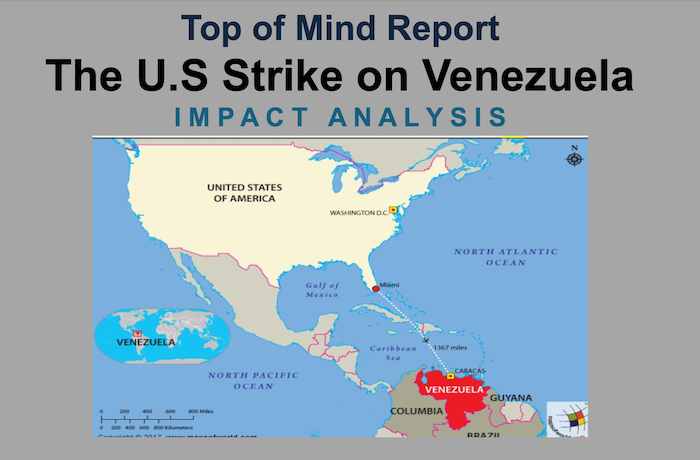
A large-scale U.S. military strike on Venezuela in early January 2026 has heightened geopolitical tensions, triggered safe-haven flows in financial markets, and renewed debate over the long-term future of Venezuela’s oil sector—yet analysts say the immediate impact on global oil supply is likely to remain contained. According to an impact analysis by ACAP Stock Brokers, the operation prompted a muted international response despite strong condemnation from Venezuela and its traditional allies, including Russia, China and Iran, reflecting a crowded geopolitical landscape already dominated by conflicts in Ukraine and the Middle East
Market reactions were swift but measured. Gold prices climbed sharply as investors sought safety amid rising uncertainty, with bullion rallying about 2.7% to around USD 4,448 per ounce, while silver surged more than 5%. Bitcoin also gained, rising above USD 94,000, underscoring a broader flight to alternative stores of value during periods of geopolitical stress. By contrast, oil markets showed restraint, as structural oversupply conditions and disciplined output by OPEC continued to anchor prices despite the escalation.
Venezuela’s ability to influence oil markets remains constrained by years of underinvestment, sanctions and infrastructure decay. Once producing as much as 3.5 million barrels per day in the 1970s—over 7% of global output—the country’s production averaged roughly 1.1 million barrels per day in 2025. Even with partial easing of U.S. sanctions, analysts estimate output could rise only gradually to about 1.5 million barrels per day over the next two years, a level still far below its historical peak and insufficient to materially alter global supply-demand balances in the near term.
Major investment banks remain cautious. Goldman Sachs expects any recovery in Venezuelan production to be slow and capital-intensive, requiring billions of dollars in new investment, and projects that even a rise to 2 million barrels per day by 2030 would shave only about USD 4 per barrel off long-term oil prices. Capital Economics is more sceptical, warning that political instability and weaker oil prices could deter sustained foreign investment, limiting Venezuela’s comeback as a major energy exporter.
For now, analysts say the strike’s broader significance lies less in immediate market disruption and more in its geopolitical signal. While global markets have largely absorbed the shock, the episode adds another layer of uncertainty to an already fragile international order—one where financial markets are increasingly conditioned to react swiftly, seek safety, and then recalibrate once the initial risk premium fades.