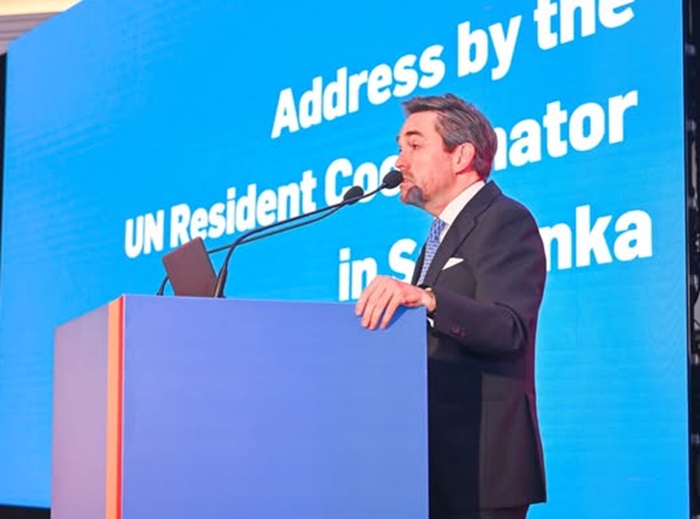
The United Nations today (11) launched its Humanitarian Priorities Plan, aiming to raise USD 35 million over the next four months, to support efforts to restore the lives of Sri Lankans affected by Cyclone Ditwah.
The plan aims to reach 658,000 of the most vulnerable people between December 2025 and April 2026, following a formal request for international assistance from the Government of Sri Lanka.
The plan follows the Government’s request for international assistance and complements and supports ongoing national efforts by directing assistance to the people and areas most severely impacted by the cyclone. The HPP’s support spans immediate life-saving assistance in education; food security, agriculture and nutrition; health; protection; shelter, non-food items and camp coordination; water, sanitation and hygiene; and early recovery. It outlines how humanitarian partners are working together to deliver assistance rapidly and in complementarity to nationally led efforts to meet critical needs.
Support under the plan is guided by identified vulnerabilities as well as findings from the Joint Rapid Needs Assessment completed with the Disaster Management Centre. An in-depth analysis is underway to guide further interventions.
Cyclone Ditwah has caused extensive loss of life and widespread damage across the country. At its peak, nearly 2.2 million people were affected, with over 600 deaths recorded to date and nearly 200 people still missing. More than 91,000 homes have been damaged or destroyed. While some families have begun to return home or seek alternative shelter, data indicates that over 85,000 people remain in safety centres. Ongoing monsoon rains continue to pose a hazard, prompting continued landslide warnings and preventing many others from returning.
Beyond the immediate destruction, the impact of the cyclone is placing additional strain on already vulnerable families. Flood water and damaged sanitation systems have increased the risk of water- and vector-borne diseases, while access to health services remains constrained in several districts. Food security is affected due to crop losses, market disruptions and reduced incomes, heightening risks for households already struggling to meet basic needs.
Protection risks are also increasing, with crowded shelters and limited facilities heightening the risk of sexual and gender-based violence, particularly for women and girls. An estimated 462,000 children are among those affected by the cyclone, many of whom face disruptions to essential services.
The UN and humanitarian partners are continuing to work closely with national authorities to meet urgent needs. From the outset of the disaster, relief items, including non-food items, safe water and sanitation, maternity and dignity kits, and emergency food supplies have been reaching affected communities.
While initial contributions from bilateral partners and US$ 4.5 million from the UN Central Emergency Response Fund (CERF) are enabling rapid assistance, significant gaps remain. The HPP outlines the urgent need for additional resources to fully fund the response and safeguard the most vulnerable.
The United Nations calls on the international community to contribute to ensure that life-saving assistance reaches all who need it most.
Under the planned arrangement, eligible enterprises will have access to government-funded loans at an annual interest rate of just 3 per cent over a three- year period. The scheme will also include a grace period of up to six months, with borrowing limits set at Rs. 250,000 for micro-level ventures and Rs. 1 million for small and medium-scale businesses.
Officials say these terms are meant to ease cash-flow pressures and give affected entrepreneurs enough breathing space to rebuild operations.
Cabinet has also endorsed the continuation of the RE–MSME – Disaster Relief programme, with the President—acting in his role as Minister of Finance —greenlighting both initiatives. Authorities hope the combined effort will accelerate recovery in sectors hit hardest by the recent adverse weather, while encouraging businesses to adopt more sustainable and disaster-resilient practices in the long run.