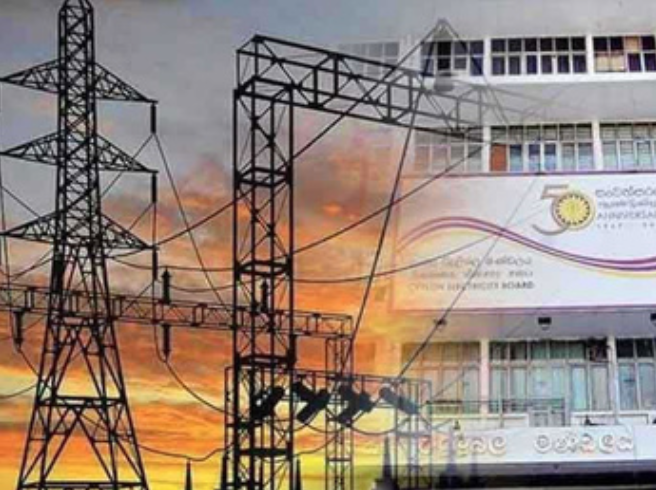
Sri Lanka has perfected many administrative arts over the decades. Delay. Deflection. Circulars that eat their own tails.
Now, add a new one to the list: the Voluntary Retirement Scheme that isn’t voluntary.
More than 2,000 employees of the Ceylon Electricity Board—many of them young or mid-career professionals—have done exactly what the law asked of them. They opted out. They filed on time. They planned their lives accordingly.
And then they were told, in effect: not so fast.
Voluntary, but only in theory
The government gazetted a VRS on August 26 last year as part of the grand plan to “unbundle” the CEB —breaking it up into four shiny new corporate entities with impressive names and predictable acronyms.
Employees were given a two-month statutory window to decide whether to transition to these successor companies or exit with a guaranteed VRS. About 2,200 employees formally notified the CEB by October 27, 2025 that they would not be making the jump.
End of story? Hardly.
Despite the law, the gazette, and the paperwork, employees now say they are being forcibly retained in service—unable to resign, retire, migrate, take up private sector employment, or even plan their lives beyond next week.
This is not a labour policy. This is institutional clinginess.
“We’ll pay you later, just let us leave now”
What makes this more farcical is that the employees are not even fighting about money—yet.
Their message to the Energy Minister is blunt:
Compensation can come later. Permission to leave cannot.
Some have foreign job offers with deadlines. Others are mid-way through visa processes. A few have already travelled abroad—only to receive ominous “vacation of post” letters that now threaten their VRS entitlements.
In a particularly Sri Lankan flourish, some employees have been selectively allowed to withdraw their VRS applications, while others are told to wait indefinitely. Equality before the law, apparently, now operates on an appointment-only basis.
Leadership vacuum, right on schedule
As if this wasn’t chaotic enough, the Power Sector Reforms Secretariat—the very institution tasked with managing this transformation—has been left leaderless.
Its Director General, Pubudu Niroshan Hedigallage, has submitted his resignation effective January 15, 2026. No successor has been announced.
This matters because PSRS is responsible for restructuring the CEB, overseeing the unbundling, and shepherding the sector through what is supposed to be a legally precise transition.
Instead, employees describe a “dangerous leadership vacuum at a critical moment”—which is bureaucratic code for no one is answering the phone.
The appointed date that never arrives
February 1, 2026, is meant to be the magic day—the “appointed date”—when assets transfer and the new companies legally come alive.
Except it hasn’t been gazetted.
Without that gazette notification, the successor entities have no legal authority, and employees remain trapped in an organisational limbo that is neither old CEB nor new corporate future.
The result?
Plummeting morale.
Fallingproductivity.
A national utility staffed by people who have already mentally—andlegally—left.
Reform, Sri Lankan style
Let’s be clear: forcing employees who have lawfully opted out to remain in service serves no productive purpose—not for the CEB, not for the power sector, and certainly not for the country.
This is reform conducted with all the elegance of a power cut during a cabinet meeting.
The irony is thick enough to power a turbine: a reform meant to improve efficiency is paralysing the institution it seeks to fix.
A simple ask, lost in bureaucracy
The employees’ request to the Energy Minister is almost painfully reasonable:
Gazette the appointed date on or before February 1, 2026.
Allow VRS-opted employees to exit under approved leave or another formal mechanism.
Protect the rights and benefits of those already abroad due to time-sensitive professional commitments.
In other words: follow your own law.
Until then, Sri Lanka’s power sector reform will remain what it increasingly resembles—not a restructuring exercise, but a case study in how to turn “voluntary” into “compulsory”, and reform into farce.
And no amount of unbundling can fix that.