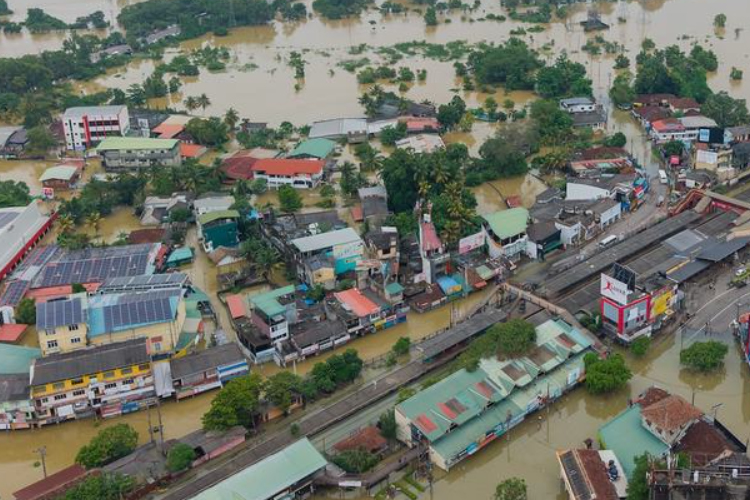
Nearly all communities affected by Cyclone Ditwah in Sri Lanka have experienced damage to homes, roads, and other critical infrastructure, according to a new assessment released by the United Nations Development Programme (UNDP) on Wednesday. This report highlights the significant recovery needs and underscores the urgency for accessible financing for the most vulnerable populations.
The qualitative assessment is based on key informant interviews with 510 local officials, business leaders, and community representatives across 85 divisional secretariat divisions in the 22 most affected districts. It revealed that 95% of respondents reported damage to residential, transport, industrial, or community infrastructure within their areas, with housing and roads most frequently affected.
Cyclone Ditwah struck Sri Lanka on November 26, 2025, marking the country’s deadliest disaster since the 2004 tsunami. An initial UNDP geospatial analysis released in December 2025 estimated that floodwaters inundated nearly 20% of the country’s land area, affecting approximately 2.3 million people. Building on this analysis, the qualitative assessment indicates deep and widespread recovery needs, with many communities lacking the necessary materials, labor, and financing to rebuild.
“We commend the Government of Sri Lanka’s announcement of plans to provide LKR 95 billion in support to MSMEs, including a 3% concessional loan scheme, which is a crucial step in accelerating recovery. At the same time, it is essential that we prioritize support for those operating outside formal systems—often unseen yet forming the backbone of the local economy,” said Azusa Kubota, UNDP Resident Representative in Sri Lanka.
“The RAPIDA assessment underscores the importance of moving beyond short-term humanitarian assistance toward a comprehensive approach to early recovery and resilience-building. This is vital to ensure vulnerable populations do not fall back into poverty and become trapped in the cycle. Investing in recovery efforts that strengthen local economies—including targeted support for the informal sector—will be central to building disaster resilience and securing sustainable livelihoods for all.”
UNDP’s assessment highlights widespread economic fallout. A large majority of respondents (93%) reported that livelihoods had been affected in their areas, citing crop and livestock losses, job losses, and business closures, including in the informal sector, which employs a significant portion of Sri Lanka’s workforce. Key recovery needs include support for micro-enterprises, access to low-interest loans, and capital for small businesses to rebuild their infrastructure and stocks.
More than half of those interviewed indicated that vulnerable groups, such as older people, persons with disabilities, and female-headed households, were among those affected. The most common coping mechanisms included government aid or support (reported by 76% of respondents), followed by assistance from international organizations at 45%, and informal lending at 40%. These patterns point to rising household debt stress, with implications for both household welfare and the pace of recovery for micro and small enterprises.
Respondents also identified shortages of construction materials, limited availability of skilled labor, and funding constraints as obstacles to rebuilding damaged infrastructure. They also cited delays in approvals and weak coordination between institutions as factors slowing recovery efforts.
Environmental and health risks have emerged as additional concerns, with local officials reporting water contamination, soil erosion, and damage to ecosystems, indicating longer-term climate and public health impacts.
Sri Lanka, like other countries in South Asia, is increasingly exposed to extreme weather events linked to climate change, including floods, cyclones, and prolonged droughts.
UNDP emphasized that the findings highlight the need for continued support to restore infrastructure and livelihoods, particularly for informal workers and small businesses, while strengthening the climate and disaster resilience of enterprises and industries as the country transitions from emergency relief to recovery and reconstruction.