As the sun rose over Colombo on February 28, 2026, news of a coordinated military strike by the United States and Israel against Iranian strategic assets sent ripples of concern through Sri Lanka. This island nation, still recovering from the economic crisis of 2022, faces a direct threat to its fuel, food, and family incomes amidst this escalating Middle East conflict.
Sri Lanka finds itself in a “fragile waiting zone.” Although February’s inflation data indicated a dip to 1.6%, the geopolitical upheaval threatens to disrupt these figures. From the tea estates in Nuwara Eliya to the expatriate communities in Kuwait, the nation braces for a potential crisis threatening its hard-won stability.
The Middle East situation has escalated, plunging into uncharted territory. The direct engagement between the U.S.-Israeli coalition and Iranian infrastructure has effectively paralyzed the Strait of Hormuz, a crucial oil route. Iran has vowed a severe response, and proxy groups across Lebanon, Iraq, and Yemen are already retaliating against Western assets.
Sri Lanka, maintaining delicate relations with both Tehran and Washington, faces a precarious neutral stance as its economy remains highly sensitive to regional volatility. The military operation, codenamed “Operation Epic Fury” by the U.S. and “Roaring Lion” by Israel, targeted Iranian nuclear facilities, missile infrastructure, and political leadership. Reports suggest that Iran’s Supreme Leader, Ali Khamenei, may have perished in the strike, though official confirmation is pending.
Iran responded with a wave of ballistic missiles and drones, targeting not only Israel but also U.S. bases and civilian infrastructure in Kuwait, Qatar, Bahrain, Saudi Arabia, and the UAE. Strikes near major transit hubs like Dubai and Kuwait International Airports have led to airspace closures and flight suspensions across the Gulf.
With the closure of the Strait of Hormuz, a vital artery for 20% of the world’s oil supply, the geopolitical situation has reached a critical point. International bodies, including the United Nations, have condemned the escalation, warning of unimaginable destruction if hostilities persist.
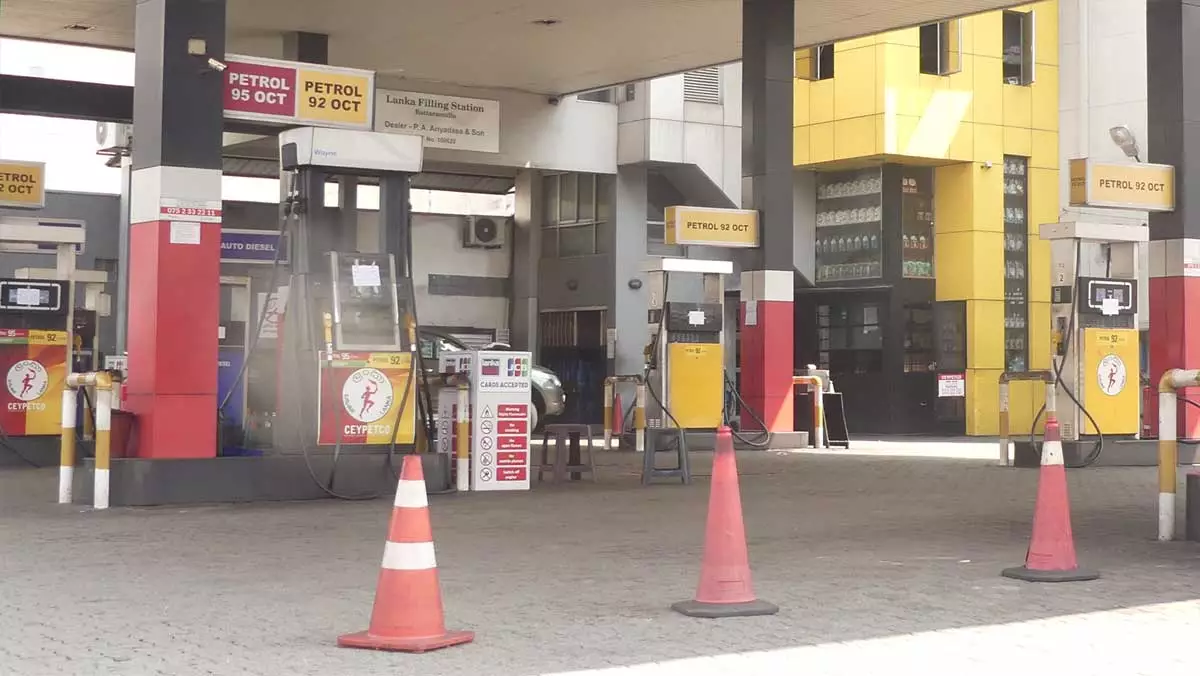
For Sri Lanka, the conflict poses a “system shock” threatening energy prices, trade routes, and the safety of millions of expatriate workers in the Gulf. The immediate economic impact is evident in the energy sector, with Brent crude prices surging over 7% and surpassing the US$90 mark. This led the Ceylon Petroleum Corporation (CPC) to announce a fuel price hike, causing vehicle queues at oil retailers across Colombo and other towns.
Sri Lanka’s dependency on Middle Eastern crude oil for its Sapugaskanda refinery remains a significant vulnerability. Any disruption to shipments through the Strait of Hormuz could halt operations within a month, despite assurances of 37 days of fuel stocks. The geopolitical risk premium further inflates global oil prices, threatening to reignite inflation and diminish living standards, especially for households just beginning to see price stability.
The export sector, crucial for recovery, faces logistical challenges. The Middle East is a significant destination for Sri Lankan exports and a source of essential imports. Disruptions in the Indian Ocean shipping lanes or the Strait of Hormuz act as a tax on every transaction. Tea exports, especially to Iran, Iraq, and the UAE, face plummeting demand due to banking hurdles and currency instability.
Crude oil and petroleum products are the most immediate imports affected by the geopolitical risk premium. Increased war risk surcharges will force the government to spend more of its limited foreign exchange reserves on oil, leading to domestic fuel price hikes and inflation across all sectors.
Moreover, the conflict threatens Sri Lanka’s position as a maritime hub, with shipping companies rerouting vessels to avoid the combat zone, increasing transit times for apparel and rubber exports by 10 to 14 days. These delays and higher freight rates make Sri Lankan products less competitive globally, threatening the island’s export-led recovery.
The Middle East has long been a safety valve for Sri Lankan employment. With over 1.5 million Sri Lankans working in the Gulf, a regional conflict could lead to a hiring freeze, stalling private sector projects and diverting budgets toward defense. This would exacerbate youth unemployment in Sri Lanka, as the domestic job market remains saturated.
The potential disruption of worker remittances, a lifeline for the Sri Lankan economy, poses a systemic threat. Any large-scale evacuation of Sri Lankan workers from the Gulf would sever the monthly cash flow that stabilizes the Rupee against the U.S. dollar, reigniting the cost-of-living crisis and threatening debt repayment under the IMF-supported program.
The tourism industry, another pillar of recovery, could suffer significantly. The Gulf region serves as a transit point for over 60% of Sri Lanka’s high-spending tourists. The suspension of flights by major carriers due to safety concerns breaks the bridge connecting the West to the island, leading to cancellations and impacting the high-spending segment directly.
Tourism, a fast-cash industry, is crucial for foreign exchange. A slump in arrivals means lower hotel occupancy, reduced income for tour drivers, and a decline in non-food inflation relief. If the tourism sector stalls due to Middle East hostilities, the government will struggle to maintain the Rupee’s stability and fund essential imports.
The Middle East tension represents a multifaceted tax on Sri Lanka’s recovery. Rising import costs for oil and essential goods meet a sudden contraction in foreign exchange inflows, pressuring the Sri Lankan rupee. This threatens to undo the price stability achieved in early 2026 and reignite the cost-of-living crisis.
For the layman, the government’s promise of “system change” is tested by this external system shock. Living standards, which were beginning to stabilize, are once again under threat. Sri Lanka is in a defensive stance, hoping diplomacy can extinguish the Middle East fires before they burn through the island’s hard-won economic progress.
While the government cannot control the missiles in the Middle East, its ability to manage the secondary explosion of local prices will define the next year of Sri Lankan life. It is a time for cautious budgeting and national resilience.