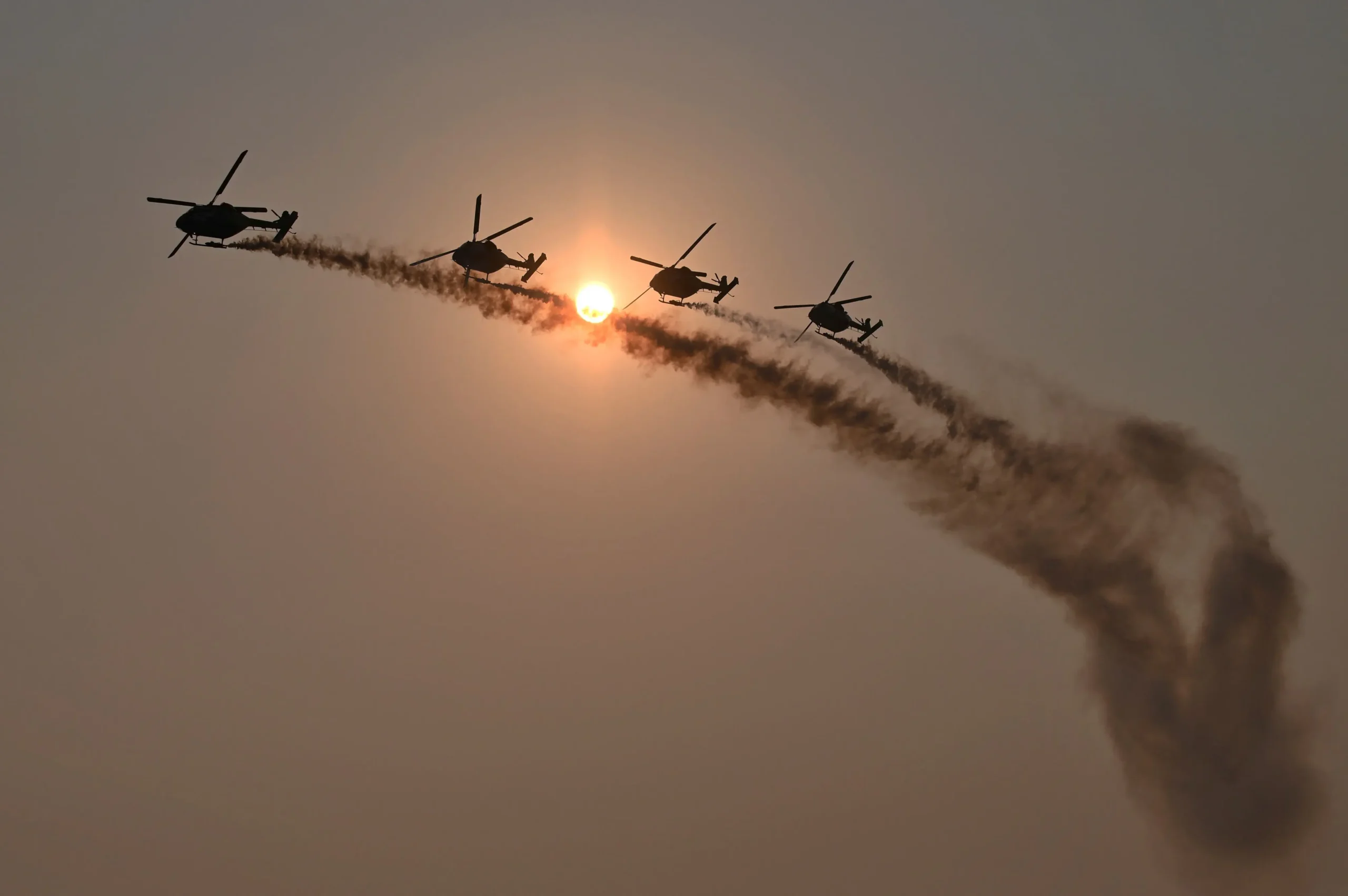
The announcement that the United States Navy will transfer surplus TH-57 Sea Ranger helicopters to the Sri Lanka Air Force has been presented as a clear-cut upgrade: pilot training, disaster response, and deepened interoperability with a longstanding defence partner. On paper, it sounds pragmatic. In reality, it warrants careful scrutiny.
The TH-57 is a trainer aircraft, not a frontline combat platform. It is reliable and proven, but its utility is largely limited to instruction, familiarisation, and basic support roles. Its arrival does not meaningfully alter Sri Lanka’s air combat capability, nor does it shift the regional strategic balance. Yet it comes with symbolic value — a visible token of continued engagement with a major Western power at a time when Colombo is navigating complex fiscal and geopolitical pressures.
From a governance perspective, the transfer is attractive: the aircraft are provided as surplus, implying low initial capital cost, and the announcement can be framed as evidence of effective diplomacy. What is less visible is the long-term operational and fiscal commitment. Trainer aircraft still require fuel, maintenance, spare parts, and trained technical personnel. These costs are recurring and fall squarely on an already stretched defence budget. Funds deployed here are funds not available for other priorities: base upgrades, operational readiness, or disaster response infrastructure.
Disaster response is the official justification. Sri Lanka is prone to floods, landslides, and coastal storms, and additional rotary-wing assets could theoretically improve rapid mobilisation. Yet the effectiveness of these aircraft depends on more than their presence. They require operational bases, logistics, trained crews, and maintenance chains — all of which are resource-intensive. Without this ecosystem, even capable aircraft remain largely symbolic.
Strategically, the transfer is incremental rather than transformative. It maintains existing partnerships without binding the country to significant obligations. For the United States, this is a low-cost method of influence; for Colombo, it is a visible asset gain without triggering public scrutiny over procurement or debt. It is a hedging strategy: accept cooperation where it is cheapest, least controversial, and most politically defensible.
It also highlights a recurring tension in Sri Lankan policy: optics versus substance. Helicopters are tangible, visible, and easily celebrated in press releases. The invisible realities — budget constraints, readiness, and sustainability — remain largely absent from the conversation. There is a risk of overestimating capability simply because the assets are physically present.
The lesson is clear. Policy decisions cannot be measured by acquisition alone. Effectiveness is determined by supporting institutions, funding discipline, and operational capacity.
Without this foundation, incremental asset transfers, however well-intentioned, may provide reassurance but not resilience.
In short, the TH-57s are unlikely to reshape strategic outcomes or disaster preparedness meaningfully. They do, however, achieve something equally important: a visible, low-risk demonstration of continued engagement, framed as capability enhancement. The aircraft may fly. Whether they actually improve readiness depends entirely on governance choices, budget discipline, and institutional rigor — variables that cannot be substituted by the mere presence of metal and rotors.