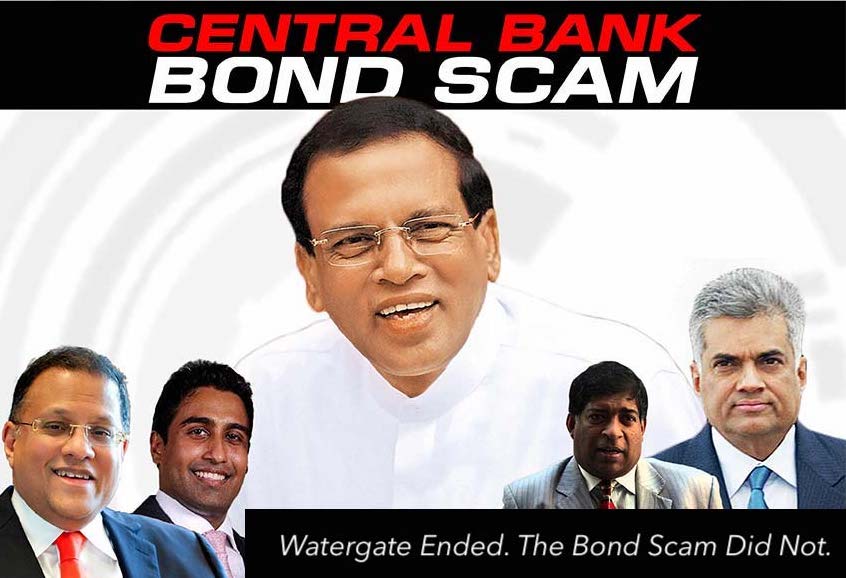
On 27 February 2015, Sri Lanka’s financial system suffered a wound from which it has never properly recovered. Eleven years on, the so-called Bond Scam remains unresolved — not because it was more complex than other scandals, but because the system allowed it to drift, stall, and fade into procedural limbo.
History offers a useful comparator.
In the United States, a president resigned over Watergate scandal. In Sri Lanka, a financial scandal of comparable institutional gravity continues without final closure. The contrast is instructive — and uncomfortable.
The lesson of Watergate was never about a break-in. It was about what followed.
Richard Nixon did not resign because operatives linked to his campaign broke into an office. He resigned because he attempted to control the aftermath — by obstructing investigations, misusing state agencies, authorising silence, and believing he could outlast scrutiny.
Sri Lanka’s Bond Scam followed a different path — but arrived at a similar crossroads.
The initial wrongdoing was clear. A Treasury bond auction was conducted under conditions that raised immediate red flags: abnormal yields, conflicts of interest, and enormous losses to the State. On its own, the episode was serious but containable. Systems exist to investigate financial malpractice. Institutions are designed to respond.
What transformed the Bond Scam into Sri Lanka’s most damaging financial scandal was not the auction itself, but what came after.
Unlike Watergate, Sri Lanka’s cover-up did not take the form of overt obstruction. There was no single “smoking gun” tape. Instead, the process dissolved into something more subtle — and more corrosive: delay.
Committees were appointed. Reports were written. A Presidential Commission of Inquiry was held. Indictments were filed. Each step suggested progress. Yet none produced finality. The central figure in the case, former Central Bank Governor Arjuna Mahendran, did not return to face trial. Extradition failed. Proceedings slowed. Momentum dissipated.
In Watergate, exposure accelerated accountability. In Sri Lanka, procedure absorbed it.
This distinction matters. Democracies do not collapse only when crimes occur. They erode when institutions fail to conclude accountability. When justice becomes endlessly “ongoing”, wrongdoing is neither punished nor forgotten — it is normalised.
The contrast with the United States is stark. Once Nixon’s role in the cover-up was established, political support collapsed. Congress moved. The system asserted itself. The presidency survived precisely because the president did not.
In Sri Lanka, the system survived — but the case did not end.
Even the United Kingdom offers a closer model of consequence. British leaders have fallen not necessarily because of the original act, but because they misled Parliament, withheld facts, or drip-fed truth. In those cases, misrepresentation proved more fatal than misjudgement. The institutional reflex was to protect Parliament’s authority, not the individual.
Sri Lanka has yet to internalise that reflex.
Today, that failure is harder to excuse. The current administration governs with overwhelming parliamentary strength. There is no hostile legislature, no fragile coalition, no shortage of political capital. If closure cannot be achieved now, then the question is no longer procedural — it is moral.
The Bond Scam did not become Sri Lanka’s most enduring financial scandal because of one bond auction. It became so because the system never finished the story.
Watergate ended because the system refused to wait. The Bond Scam endures because the system chose to.
That choice carries consequences. Markets remember. Citizens remember. And corruption, when left unresolved, becomes precedent.
Eleven years on, Sri Lanka still pays interest — not just on public debt, but on unfinished justice.
Until the Bond Scam is concluded — not explained, not narrated, not deferred — every promise of reform comes with an asterisk. And every invocation of accountability sounds conditional.
History will not ask how many committees were formed.
It will ask whether the Republic had the courage to end what it began.