By Kithmi Gunaratne
Democracy likes to imagine itself as polite. It prefers calm debate, measured disagreement, and the reassuring rhythm of orderly participation. Civility, we are told, is what keeps politics from collapsing into chaos.
But across the world, from the streets of Colombo to Paris, from Minneapolis to Hong Kong,that ideal has been tested, stretched, and, at times, broken.
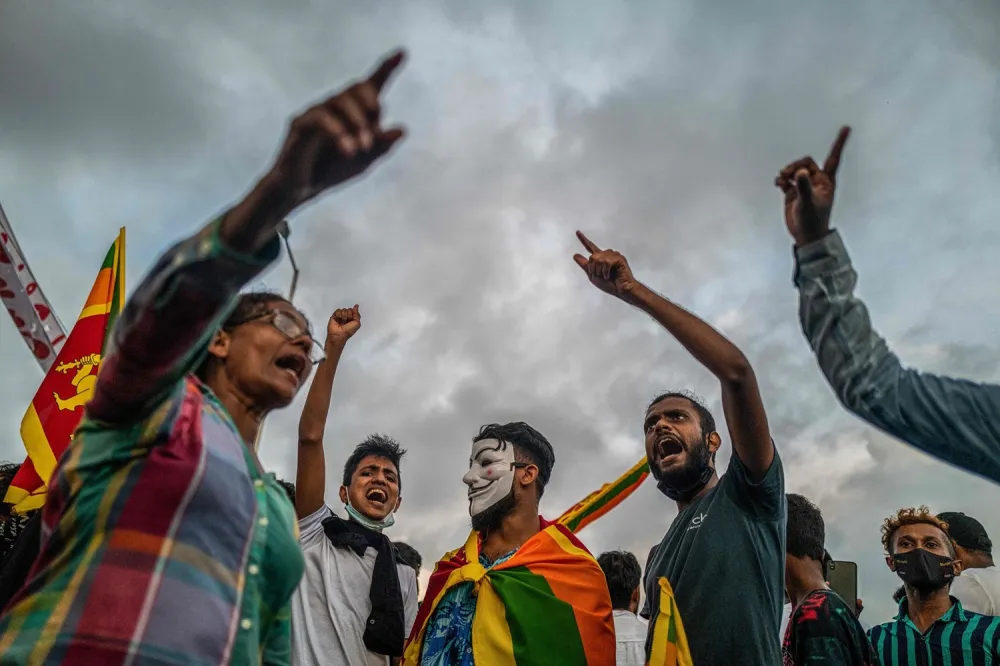
Sri Lanka’s 2022 uprising ; the Aragalaya, did not begin politely. It began with hunger, with queues, with the slow humiliation of a collapsing economy. Citizens who could no longer afford fuel or medicine did not arrive at protest sites armed with careful language. They arrived with anger. And they were criticised for it.
They were called disorderly. Uncivil. A threat to stability.
Yet this script is not uniquely Sri Lankan. It is global.
In Minneapolis, protests following the killing of George Floyd were praised when peaceful and condemned when disruptive even as that disruption forced a global reckoning with racial injustice. I
n Paris, the gilets jaunes movement was criticised for its confrontational tactics, yet it exposed deep fractures in economic inequality. In Hong Kong, protesters were labelled rioters for defying state authority, even as they fought to preserve political freedoms.
Across these contexts, the pattern repeats: dissent is tolerated only so long as it remains comfortable.
Civility, in theory, is a democratic virtue. In practice, it often becomes a boundary : one that determines who can speak, how they can speak, and how loudly. When those boundaries are set by the powerful, civility risks becoming less about mutual respect and more about maintaining order on unequal terms.
Across these contexts, the pattern repeats: dissent is tolerated only so long as it remains comfortable.
Civility, in theory, is a democratic virtue. In practice, it often becomes a boundary : one that determines who can speak, how they can speak, and how loudly. When those boundaries are set by the powerful, civility risks becoming less about mutual respect and more about maintaining order on unequal terms.
Sri Lanka’s Aragalaya laid this bare. For years, political life had been conducted within the accepted norms of civility, elections, parliamentary debate, procedural accountability. And yet, those norms coexisted with economic mismanagement, corruption, and growing public despair. Polite politics did not prevent collapse. It absorbed it.
When citizens finally broke from that script occupying public spaces, rejecting deference, demanding immediate accountability, they were not abandoning democracy. They were exposing its failure.
This is the uncomfortable truth: sometimes, incivility is not a deviation from democratic practice, but a response to its absence. And yet, Sri Lanka also reveals something the global conversation often avoids the fragility of that justification.
Because the Aragalaya did not remain static. As anger intensified, the line between disruption and destruction began to blur. Private homes were set on fire. Protesters stormed the president’s residence. For some, these moments symbolised the reclaiming of power from an unaccountable elite. For others, they marked the point at which legitimate dissent began to lose its moral clarity.
This is where Sri Lanka diverges not entirely, but instructively from many global narratives.
In places like Paris or Minneapolis, debates over protest often revolve around whether disruption is acceptable at all. In Sri Lanka, the question became sharper: when does justified incivility tip into something else entirely?
Because there is a difference between breaking norms and breaking the framework that holds society together.
Disruption that targets systems of power can expose injustice. Destruction that spills beyond those targets risks reproducing it. The burning of private homes, the invasion of personal spaces these acts shift the focus from accountability to retribution. They blur the line between political dissent and collective harm.
And yet, to fixate only on those moments is to misunderstand the movement as a whole.
Without disruption, Sri Lanka’s crisis may have remained obscured behind the language of policy and procedure. Without discomfort, there would have been little urgency for change. The protests forced a reckoning not just nationally, but internationally with the depth of institutional failure.
This is the paradox democracy must confront.
Civility stabilises. It allows disagreement without collapse. But it can also protect power, soften injustice, and delay necessary confrontation.
Incivility disrupts. It forces attention, amplifies silenced voices, and unsettles complacency. But it can also escalate, fracture trust, and erode the norms that make collective life possible.
Neither is sufficient on its own.
The global lesson from Colombo to Hong Kong, is not that one must choose between civility and incivility. It is that democracy depends on their tension. Progress often emerges not from polite consensus, but from moments of rupture that force societies to confront what they would rather ignore.
But those ruptures carry responsibility.
Sri Lanka’s Aragalaya reminds us that anger can be both necessary and dangerous. That breaking the rules of civility can expose injustice but that breaking too far can risk becoming indistinguishable from it.
Democracy, in the end, is not always polite. Nor should it be.
But if incivility is to serve democracy rather than unravel it, it must remain anchored to the purpose of justice, to accountability, to the possibility of a shared political future.