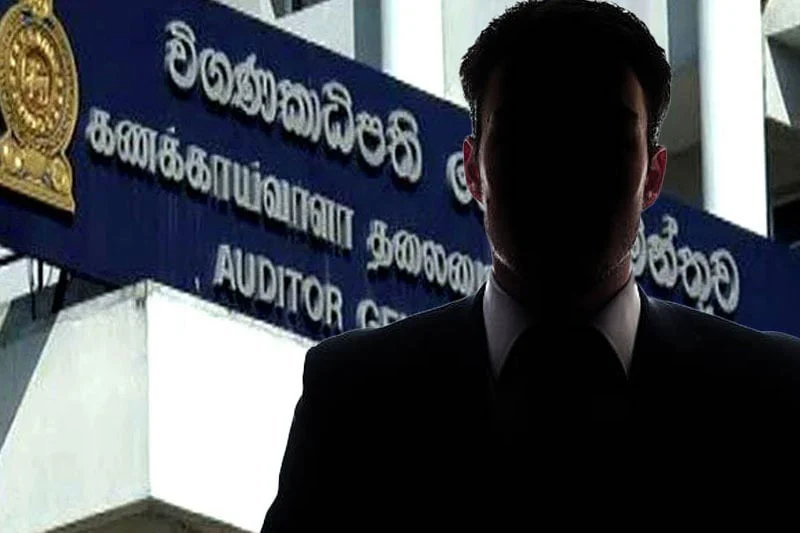
There is irony — and then there is Sri Lanka.
This week, the Ministry of Finance quietly stepped in to keep the National Audit Office (NAO) solvent, after the prolonged failure to appoint an Auditor General left the country’s apex audit institution unable to perform even the most basic function of governance: paying its own staff.
Yes — the office tasked with auditing the nation’s finances was, until days ago, financially paralysed.
With the Auditor General’s post vacant since December 6, the NAO found itself without a legally recognised Chief Accounting Officer — a role that, by design, rests with the Auditor General precisely to preserve institutional independence from ministerial control.
That independence, however, collided with reality.
By January, the NAO could not authorise expenditures, approve transactions, or release salaries. With no one legally empowered to sign off on funds, the watchdog was effectively muzzled — not by censorship, but by administrative vacuum.
Faced with the prospect of an audit office that could not pay its own auditors, the Finance Ministry intervened. Authority over NAO finances has now been delegated to Deputy Auditor General Oshan Fernando, who oversees administration, following clearance from President Anura Kumara Dissanayake, who also serves as Finance Minister.
It is an emergency workaround — not a solution.
Under normal circumstances, Parliament passes the Appropriation Bill, the Finance Minister delegates authority to the Finance Secretary, who then sub-delegates to ministry secretaries. But institutions like the NAO sit deliberately outside ministerial hierarchies. Their heads are deemed Chief Accounting Authorities precisely so they can audit without fear or favour.
When that head is missing, the law does not provide a neat Plan B.
“Somebody has to be appointed as the CAO,” a senior official conceded, with admirable understatement. “The NAO could not carry out any financial transactions — not even salary payments — because nobody had the authority.”
That alone should trouble anyone who still believes institutional failure announces itself loudly. Often, it arrives quietly — with unsigned forms and unpaid salaries.
When Transparency Hits a Dead End
The vacuum has produced a second, more troubling consequence.
With no Auditor General in place, the NAO has now sought guidance from the Right to Information Commission (RTIC), after finding itself unable to appoint a Designated Officer (DO) under the Right to Information Act.
Following the retirement of the previous DO on January 5, the NAO informed the RTIC that it lacks the legal authority to appoint a successor — because only the Auditor General, as head of the department, can do so.
This is not a technical glitch. It is a legal choke point.
Under Section 23 of the RTI Act, every public authority must appoint information officers — but only one Designated Officer, who serves as the first appellate authority when information is denied. Without a DO, the statutory appeal chain collapses. Citizens are left unable to progress from an initial refusal to the RTIC itself.
In effect, the right to information stalls at the door.
The law is unambiguous: failure to appoint a DO constitutes a breach of the RTI Act. Yet the NAO finds itself unable to comply — not out of defiance, but because no one is legally empowered to act.
This is how governance erodes — not with grand scandals, but with missing appointments, silent desks, and institutions waiting for signatures that never come.
The public interest question is simple and uncomfortable:
If the Auditor General’s office can be left headless long enough to grind itself to a halt, what does that say about the seriousness with which accountability is treated?
In a country still promising reform, this is not a footnote.
It is a warning.