By Kithmi Gunaratne
New revelations about Jeffrey Epstein’s island have revived disturbing questions about power and exploitation. But as the Iran conflict dominates global headlines, those questions risk slipping once again into the shadows.
War rearranges the world’s attention with ruthless efficiency. When missiles fly and governments speak the language of escalation, the global gaze narrows instinctively toward the battlefield. It must. War is not a metaphor or a convenient headline. It is rupture: civilians sheltering from air raids, families forced to flee, soldiers stepping into violence that will mark them for life.
The conflict surrounding Iran is not theatre. It is the culmination of decades of geopolitical tension, nuclear fears, regional rivalries, proxy confrontations that have long defined the fragile balance of power in the Middle East. War carries a terrible human cost, and that cost demands attention.
But war does something else, too. It does not only command attention – it consumes it.
In that consumption, other truths begin to fade. Some are made to fade.
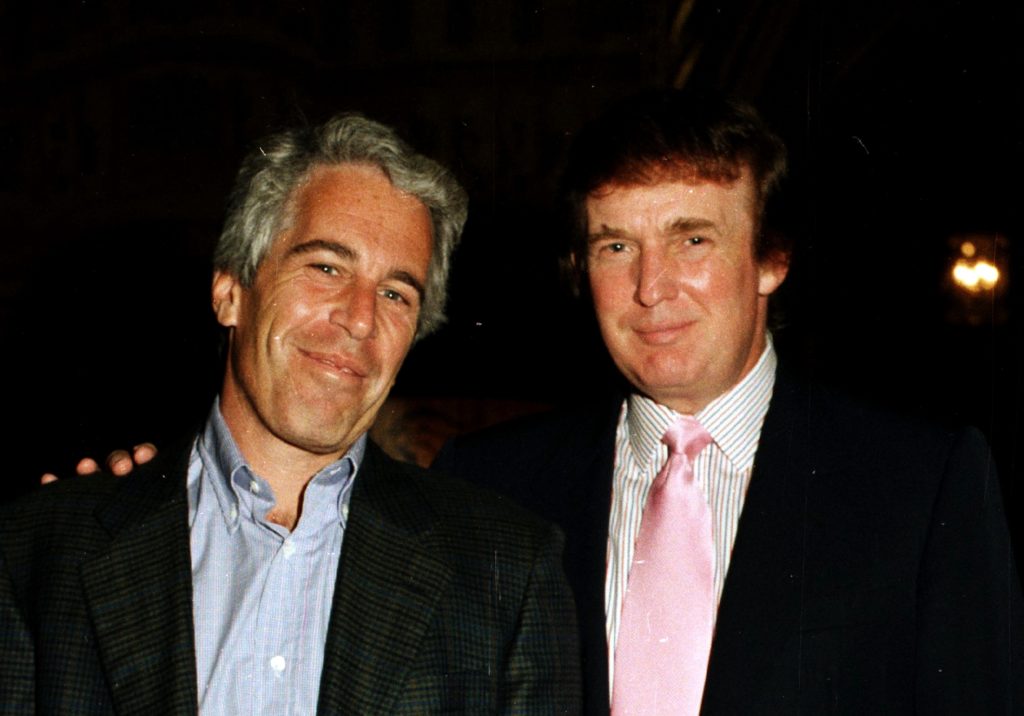
In recent weeks, as the language of retaliation and deterrence has dominated the news cycle, another story has resurfaced with far less force than it demands: the unresolved legacy of Jeffrey Epstein and the network of power that surrounded him.
New reporting drawing on US Department of Justice documents has revived scrutiny of Epstein’s private Caribbean compound on Little St James, the island now synonymous with the scandal itself. Evidence points to two radically different realities coexisting in the same place. For wealthy guests, it was a secluded paradise. For the girls and young women trafficked there, investigators say, it was something else entirely: an environment engineered for isolation, where exploitation could occur beyond the reach of help.
Some victims described the island as so inescapable that one reportedly attempted to swim away through the surrounding ocean.
The island was not just a location. It was a system of architected privacy, restricted access, a geography of privilege designed to keep scrutiny out and power in.
And that is the point where this stops being a scandal and becomes something more unsettling.
Because the Epstein case has never been simply about one man. It has always pointed toward an ecosystem, finance, politics, celebrity, wealth interwoven in ways that blur accountability. Flight logs, court filings and testimonies have hinted at a network that does not collapse neatly with a single prosecution.
So the question is not why the story persists.
The question is why it is so easy to look away.
War provides part of the answer. Political scientists describe the “rally-around-the-flag” effect: in moments of external conflict, societies close ranks. Attention consolidates. Dissent softens. Domestic scrutiny loses urgency.
No conspiracy is required. War creates its own hierarchy of attention.
But what it displaces matters.
In a world of continuous crisis, even the most disturbing revelations about power struggle to hold the front page. Outrage dissipates. Investigations lose momentum. Accountability becomes something deferred again.
None of this diminishes the reality of war. Conflict destroys lives, fractures societies and reshapes generations. The suffering unfolding in the shadow of the Iran conflict is immediate and undeniable.
But neither should war obscure everything else.
If scandals rooted in abuse and exploitation expose moral failures within societies, their resolution lies not in escalation abroad but in accountability at home. Justice is not delivered through airstrikes or deterrence. It is built through investigation, transparency and the willingness to confront power, even when it is uncomfortable, even when it implicates the influential.
History is clear about one thing: when wars are fought, it is rarely the powerful who pay the highest price. It is civilians. Families. Children. Ordinary lives are reduced to collateral.
The victims of trafficking deserve justice. The victims of war deserve peace. Neither is served by a politics that allows one crisis to erase another.
Leo Tolstoy wrote that “the strongest of all warriors are these two- time and patience.” Justice belongs to that quieter category of strength. It is slower, less visible, and far less dramatic than war. But it is also more enduring.
War dominates the present moment. It always does.
But power relies on something just as predictable: that attention will move on.
And when it does, the question is not whether the truth is still there.
It is whether anyone is still looking.