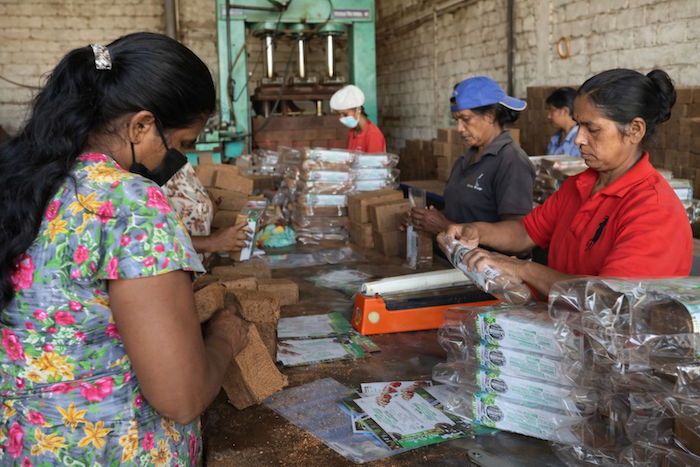
Sri Lanka has long celebrated the resilience and ingenuity of its entrepreneurs. From family-run trading houses to export manufacturers and service providers, small and medium-sized enterprises form the backbone of the island’s economy.
Yet many business owners quietly admit that the greatest challenge they face is not competition or innovation. It is the tax and regulatory environment that confronts them as soon as they begin to grow.
Consider the moment when a business crosses the threshold into formal expansion. Once annual turnover rises above the registration limit for Value Added Tax, currently set around Rs 36 million, the enterprise must register for 18 percent VAT.
With that registration comes an entirely new layer of administrative obligations: monthly returns, accounting adjustments and compliance procedures. For many smaller businesses, the paperwork alone requires hiring external accountants and consultants.
Be that as it may, VAT is only one piece of the puzzle.
Once profitable, a company must also pay corporate income tax at roughly 30 percent on its earnings. If the owner subsequently distributes those profits as dividends, further taxation applies. In effect, a portion of business income is taxed twice before it reaches the entrepreneur who built the company.
For a growing enterprise trying to reinvest profits into new machinery, marketing or staff recruitment, such tax layers can significantly reduce available capital.
Then there are additional levies such as the Social Security Contribution Levy, which applies to turnover rather than profit. Even businesses operating on tight margins may find themselves contributing to this tax, further squeezing working capital.
Import duties and tariffs add another dimension. Many Sri Lankan manufacturers rely on imported raw materials, machinery or specialised components. When duties are applied to these inputs, production costs inevitably rise. Competing internationally becomes more difficult.
The result is a paradox frequently observed in emerging economies: the tax and regulatory structure sometimes discourages businesses from expanding beyond a certain size. Entrepreneurs approaching VAT thresholds or higher tax brackets may choose to remain small rather than absorb additional compliance costs.
None of this is to suggest that taxation itself is unnecessary. Governments require revenue to fund public services, infrastructure and social programmes. The challenge lies in designing a system that encourages growth while still maintaining fiscal discipline.
After all, small and medium enterprises are not merely private ventures. They are engines of employment, innovation and economic dynamism. When SMEs thrive, economies expand. When they hesitate to grow, the entire economic ecosystem slows with them.
Sri Lanka’s policy makers therefore face a delicate balancing act. The goal must be to create a regulatory framework that supports entrepreneurship rather than unintentionally penalising success.
Because in the end, the prosperity of any economy depends not only on large corporations but on the thousands of smaller enterprises quietly building the future.