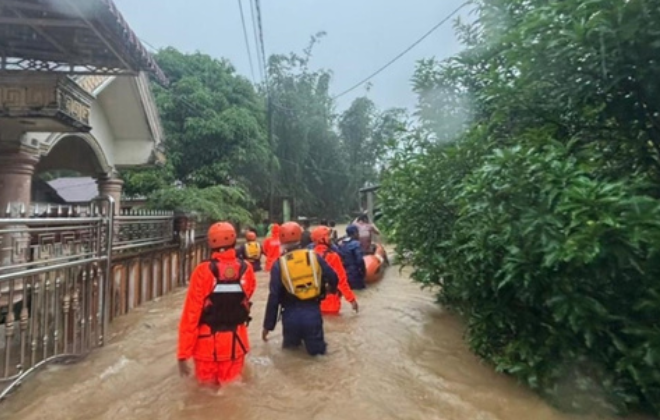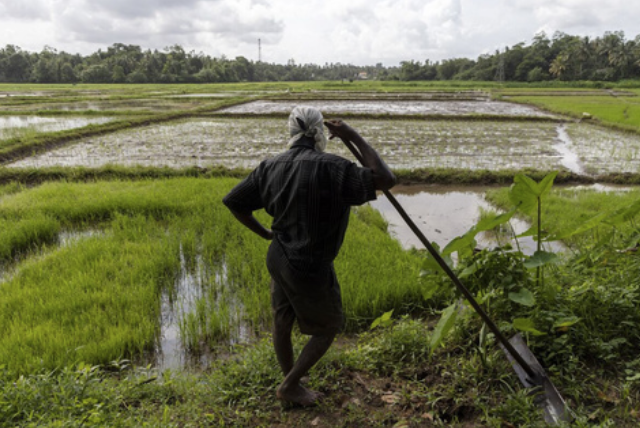
About 563,950 hectares of Sri Lanka’s main Maha rice cropping season was sown when Cyclone Ditwah high, a Joint Rapid Needs assessment conducted by the United Nations and the Disaster Management Centre said.
Sri Lanka farmers usually sow about 800,000 to 850,000 hectares in the Maha season. Just before the Cyclone hit 563,950 hactares were sown by 774,996 farmers which were at various growth stages.
“Large areas are now submerged or waterlogged following intense and prolonged rainfall, resulting in substantial expected yield losses,” the Joint Needs Assessment said.
“While paddy fields are generally prone to short- term flooding, the extent of damage varies widely depending on growth stage at the time of inundation.”
Typically, Eastern Province farmers in areas like Ampara sow first. More rice is sown in the Maha season because inter monsoonal depressions combined with the North East monsson usually bring large volumes of water to fill reservoirs in Sri Lanka’s dry and arid zones.
But young plants can die based on the number days fields are fully inundated, fields can be filled with sand and flowing water can sweep away newly sown fields.
While there is enough time to re-cultivate the land – which happens to some of the level each year due to floods – officials have raised concerns about the availability of seed paddy to sow a large extent given that some stocks in farmer residences are also water logged.
Sri Lanka has draconian regulations brought after independence from British rule preventing farmers from sowing alternative crops on paddy lands. Farmers are also put through horrific regulatory hoops to get permission to remove sand from their own fields requiring multiple approvals from various state offices, reports have shown from earlier disasters.
armers can get some income from sand sold to contractors to re-sow fields if permission is given by authorities before weeds starts to grow and contaminates the sand, farming communities have told earlier.
More fertilizer would also be needed.
About 95,799 ha of other field crops (OFCs) and 13,463 ha of vegetables, such as maize, pulses, bananas, and various vegetable crops have suffered extensive damage due to flooding, prolonged inundation, and wind impact based on Agriculture Department data, the Rapid Assessment said.
“FAO, together with the Department of Agriculture and the Department of Agrarian Development, is currently conducting field-level verification to generate accurate, district-specific damage estimates,” the report said.
“These findings will inform recovery planning, input provision, and early livelihood restoration for affected farming households.”
There are also losses to the livestock with bird flocks and cows drowning.
Key potential impacts include:
Animal and poultry mortality resulting from flooding, high winds, and the collapse ofpoorly reinforced shelters.
Loss of fodder, feed stocks, and grazing land, as pastures and stored feed may havebeen submerged or contaminated.
Damage to critical livestock infrastructure, including shelters, water points, and feeding systems, limiting farmers’ ability to resume operations.
Heightened risk of disease outbreaks, with stagnant water, overcrowding, and stressconditions increasing susceptibility to infections.
Disruption of supply chains, affecting access to markets, veterinary services, breedinginputs, and transport links.
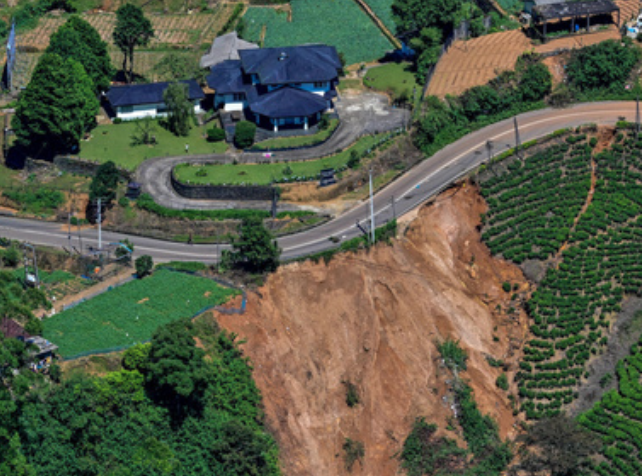
Significant economic losses for smallholder farmers, undermining household income, nutrition, and overall food security in the affected areas.
According to the Ministry of Fisheries, Aquatic and Ocean Resources (MOF)
Many small fiberglass boats used in coastal fisheries, including nearly 200 outboard motor boats, canoes, and traditional crafts, have been damaged, along with an undetermined number of multiday boats operating in the high seas, according to the Ministry of Fisheries, Aquatic and Ocean Resources (MOF) “The inland fisheries sector has suffered extensive losses due to damage to seasonal and perennial reservoirs and the escape of stocked fish following flooding,” the report said.
“Several fish-culture cages were damaged or washed away.”
Aquaculture operations, including ornamental fish farms, shrimp farms, seaweed units, and sea- cucumber sites—have incurred significant losses due to inundation and damage to infrastructure and production systems.
Hewawasam said the authorities have handled 269 tourists who had been stranded in disaster-hit areas. “The most difficult areas are Nuwara Eliya and Gampola. There are some hotels. But still we have been able to rescue them with the support of the Air Force.”
Nalin Jayasundara, President of Sri Lanka Association of Inbound Tour Operators (SLAITO) said the country will see a better winter season this time compared to the last year though there could be a slight dip up until December 2015.
“We received a few cancellations after the incident, but it is negligible.”