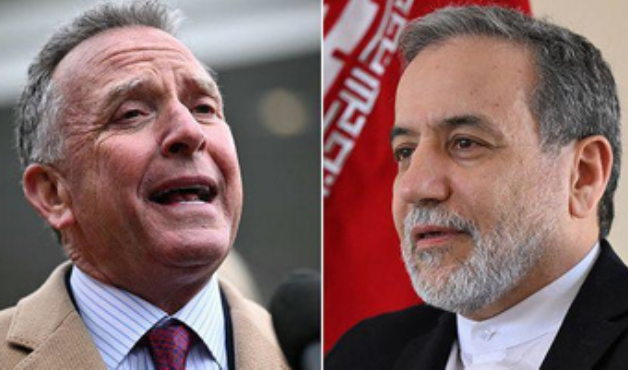
A familiar cycle now unfolds on the world stage: tensions between two long-time rivals, punctuated by military posturing, public threats, and the sudden possibility of negotiation. But the latest turn — Iran’s announcement that it is prepared to seek “fair and equitable negotiations” with the United States — demands deeper scrutiny beyond the headlines.
From Tehran’s perspective, the move marks a shift — however cautious — in rhetoric. Masoud Pezeshkian, Iran’s reformist president, publicly instructed his foreign minister to explore talks with Washington, stipulating that any engagement must occur in an environment “free from threats and unreasonable expectations.”
That qualification is anything but incidental.
A Rhetorical Turn, Not a Strategic Pivot
Tehran’s condition — no threats, no coercion — reflects decades of mistrust cultivated by sanctions, military pressure, and diplomatic ruptures. Iran’s leadership, including its foreign minister, has openly acknowledged that trust with the U.S. remains frayed.
And yet, the instruction to pursue negotiations represents the first unequivocal indication that Tehran might engage in discussions organized by third parties — most likely in Turkey — on issues central to international security.
From Washington’s side, the message has been mixed. President Donald Trump and his officials have signalled that talks are “ongoing” and necessary, even as the U.S. maintains a robust naval presence in the region and conditions any agreement on curbing Iran’s nuclear programme and associated technologies.
Diplomacy has not yet been formally confirmed by either side — only announced as a possibility. That contrast between potential and certainty sits at the heart of public and analyst scepticism.
The Shadow of History
The shadow of past negotiations looms large. In 2025, indirect talks between the U.S. and Iran took place under regional mediation, focusing on nuclear compliance and non-proliferation goals. Those discussions ultimately fell short, and military escalation followed, including bombing of nuclear sites and increased sanctions.
Iran’s willingness now to re-enter talks, even with guarded language, may reflect more than diplomatic pragmatism — it mirrors the deep economic and political pressures facing Tehran: sanctions that impact ordinary citizens, political turmoil at home, and regional isolation.
Yet it also underscores a fundamental Iranian concern: negotiating under “threats and unreasonable expectations” is, from Tehran’s perspective, no negotiation at all.
If there is one lesson from decades of bitter U.S.–Iran relations, it is this: the conditions of negotiation matter as much as the subject.
What “Fair and Equitable” Really Means
The phrase itself — “fair and equitable negotiations” — has drawn attention precisely because it encapsulates Iran’s distrust of past diplomatic frameworks. The term suggests not merely a meeting of officials, but a rebalancing of the terms under which engagement proceeds.
From a Western standpoint, that formulation may seem evasive. For Tehran, it is essential. Equitable negotiation, in Iranian political parlance, implies mutual concessions and respect for national sovereignty — a departure from past talks that Tehran perceived as one-sided or punitive. Critics in Washington and allied capitals argue that fairness cannot be divorced from concrete commitments: limitations on uranium enrichment, limits on missile development, transparency with the International Atomic Energy Agency, and rollback of regional proxy support. Iran has been resistant to linking nuclear talks with broader geopolitical demands, a stance likely to complicate any negotiation.
Regional Stakes Are Enormous
It is no accident that other governments are involved. Turkey, Saudi Arabia, Egypt and Gulf states have an interest in preventing renewed conflict and stabilising energy markets. The United Arab Emirates has publicly warned that the Middle East does not need a new U.S.– Iran war. Oil markets have responded to the diplomatic shift; prices eased recently on signs that tensions may be de-escalating.
That economic feedback loop — diplomacy affecting markets — underscores the global stakes of what otherwise might appear as distant negotiations.
Scepticism and Reality: Two Sides of the Same Coin
For all the talk of diplomacy, scepticism abounds. Analysts point to the deep institutional distrust between Tehran and Washington — a distrust grounded first in the U.S. withdrawal from the 2015 nuclear accord known as the Joint Comprehensive Plan of Action, and later reinforced by punitive sanctions and military confrontations.
Hard-liners in both capitals remain wary. U.S. officials warn that failure to reach an agreement could entail “bad things,” even hinting at military responses. Meanwhile, Iranian authorities continue to frame any concession as a negotiation only under equal terms.
That dual realism — each side conditioned by decades of mutual suspicion — may make progress feel like false dawns.
The Path Ahead
What is most striking about the current state of affairs is this: talks are both imminent and uncertain.
They may materialise as indirect dialogues facilitated by regional partners. They may falter before they begin. Or they may proceed to a framework that, if successful, holds implications not just for U.S.–Iran relations, but for Middle Eastern stability and the global non-proliferation regime.
What remains clear is that two global powers are now publicly expressing — however cautiously — a shared interest in dialogue over open conflict.
That, in itself, is notable.
But until terms are defined, agreements signed, and actions taken, the world will watch with measured hope — and justified scepticism.