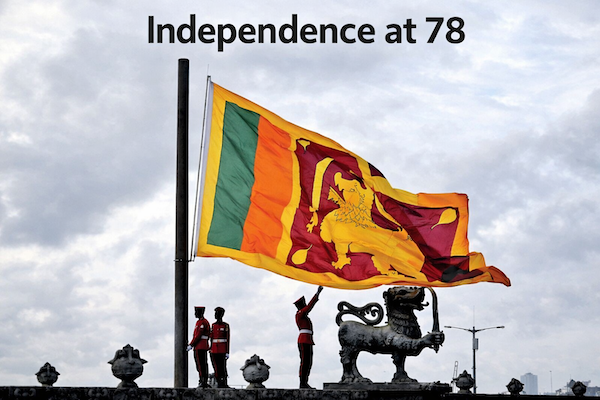
Freedom Was Won — Accountability Was Not. On 4 February 2026, Sri Lanka marks 78 years of independence.
There will be flags, parades, and speeches thick with sacrifice and sovereignty. And none of that is misplaced. Independence was earned, not gifted. It was the result of struggle, negotiation, and political maturity.
But anniversaries are not only for applause. They are for reckoning.
Seventy-eight years later, the central question facing this Republic is no longer whether we are free from colonial rule. That was settled in 1948.
The harder, more uncomfortable question is this:
What have we done with independence — and what have some done to it?
Pride, Yes — But Not Illusion
Sri Lankans have every reason to feel pride.
We endured a brutal civil war without fracturing the State. We survived terror without surrendering democracy.
We weathered economic collapse without social implosion.
The Republic bent — but it did not break. That resilience matters. It deserves recognition.
But patriotism that refuses to confront betrayal is not loyalty.
It is avoidance.
An independent nation is not judged by how often it salutes itself — but by how honestly it protects the public trust.
The Quiet Treason of the Privileged
Independence bestowed citizenship, rights, opportunity, and access. For millions, it meant education, public service, enterprise, and dignity.
For a small but devastating minority, it meant something darker.
It meant access to the State as a private vault.
These were not foreign exploiters.
They were not colonial overlords.
They were citizens of this land — born under its flag, educated at public expense, entrusted with authority — who then robbed the nation of its finances, its assets, and its future.
This is not metaphor. It is documented reality. Sovereign debt accumulated without productive return. Public enterprises hollowed out.
State land treated as personal inheritance.
Regulatory capture normalised. Losses socialised; gains privatised.
If treason is the betrayal of a nation’s interests, what gentler word can possibly apply?
Independence Without Accountability Is Theatre
A Republic that cannot discipline its own elites is not fully sovereign — only ceremonially independent.
We have laws.
We have institutions.
We have investigators and commissions.
What we have lacked — persistently — is closure.
Investigations are announced. Files are opened.
Committees are appointed.
But outcomes?
Delayed. Diluted. Disappearing.
This failure corrodes public faith more effectively than any external enemy ever could. It teaches the worst among us a dangerous lesson: wait long enough, and consequences dissolve.
Should the Guilty Face the Music?
Yes. Without hesitation.
But not mob justice. Not vengeance. Not political theatre.
An independent nation must do something far more difficult — and far more powerful.
It must apply the law fully, proportionately, and to the end.
That means:
asset recovery, not just arrests,
restitution, not just speeches,
disqualification from public office where warranted, and convictions that survive appeal, not just headlines.
Facing the “legendary music” does not mean spectacle. It means consequence.
A State that allows looters to enjoy their spoils while preaching sacrifice to citizens is not merely hypocritical. It is complicit.
Loyalty Is Not Silence
There is a lazy argument that criticism on Independence Day is unpatriotic.
It is precisely the opposite.
Silence in the face of plunder is the real betrayal. Demanding accountability is an act of loyalty.
Nations do not collapse because citizens ask hard questions.
They collapse when citizens are trained not to.
What Independence Must Mean at 78
At 78, independence cannot remain a ceremonial inheritance.
It must mean:
public office is stewardship, not entitlement,
citizenship carries obligation as well as rights,
economic crimes against the State are treated as crimes against the people,
and no surname, uniform, or past service grants immunity for future wrongdoing.
Independence is not a flag. It is a standard.
The Question That Must Be Asked — Every Year
As the bands play and the flags rise, Sri Lanka must confront one unavoidable question:
Are we merely free — or are we fair?
Because freedom without fairness becomes shelter for predators.
And independence without accountability becomes performance.
Seventy-eight years on, loyalty to Sri Lanka demands more than pride.
It demands that those who robbed the nation using the privileges of independence are finally made to answer — not to crowds, not to politics, but to the law.
That is not vengeance. That is sovereignty.
HISTORICAL BOX | 1948 vs 2026: What Changed — What Didn’t
1948
Independence achieved through constitutional transfer Faith in institutions high
Political elite small, accountable, visible
Public finance modest but manageable
Corruption present — but limited in scale
2026
Full republican sovereignty
Institutions exist but credibility uneven
Political and economic elites entrenched
Public debt at historic highs
Corruption systemic, complex, and internationalised
What Changed
Scale of the State
Complexity of finance and governance Global exposure and opportunity
What Didn’t
Elite impunity
Weak consequences for economic crimes Tendency to confuse patriotism with silence
Lesson:
Independence removed foreign rulers.
It did not automatically remove domestic predators.
That task remains unfinished.