FINANCIAL CHRONICLE – A former research expert from the Asian Development Bank has emphasized the importance of Sri Lanka increasing its trade with India to mitigate risks associated with the ongoing geopolitical challenges.
Sri Lanka and India have a longstanding history of attempts to upgrade their 1998 Free Trade Agreement (FTA) into a more comprehensive deal. Despite completing technical negotiations for two major frameworks, CEPA and ETCA, these agreements have not been signed due to significant political opposition and domestic pressure within Sri Lanka.
Ganeshan Wignaraja, a former director of research at the Asian Development Bank Institute, highlighted the necessity of upgrading the existing FTA with India. “The short answer for Sri Lanka, I think, is that you know there is this risk of trade diversion,” Wignaraja stated at a forum held in Colombo last week.
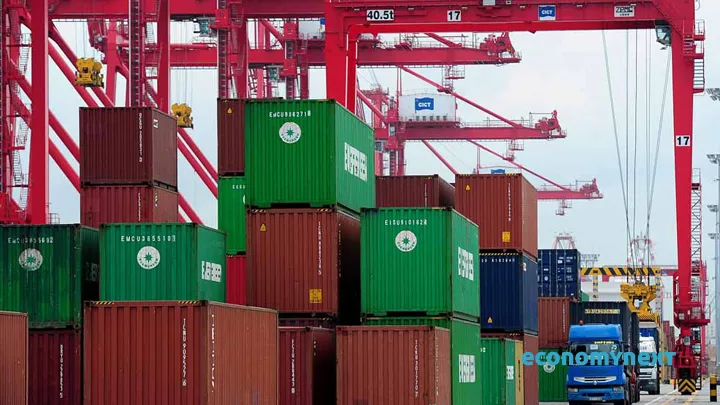
Data indicates that Sri Lanka’s merchandise exports to India reached 1.04 billion US dollars in 2025, with items under the Indo-Lanka FTA consistently generating more exports than imports. Wignaraja emphasized the need for Sri Lanka to deepen integration with India’s market and capitalize on its benefits, advocating for a more strategic relationship.
“We have to take a strategic view of India. We have a very limited trade agreement signed decades ago. But there was a discussion on an investment agreement to build in the bits. I think we better do all that rather quickly,” he remarked.
Negotiated between 2005 and 2008, CEPA (Comprehensive Economic Partnership Agreement) was intended as a natural evolution of the existing FTA, expanding beyond goods to include services, investments, and technology transfer. However, professional bodies such as doctors, engineers, and lawyers, along with local business chambers, expressed concerns that Sri Lanka’s small market could be overwhelmed by Indian professionals and cheaper labor, potentially leading to widespread local unemployment.
In 2008, the Mahinda Rajapaksa government faced significant criticism from nationalist political allies who perceived the deal as a threat to national sovereignty.
Wignaraja noted that even within the current Free Trade Agreement, many constraints hinder greater trade opportunities, and further liberalization is possible. “What is it that we can do in India given the way in which that earlier trade agreement was done? Lots of exclusions such as the quota on garments, there are lots of regulations that affect our primary agriculture stuff that can go to India,” he explained.
“I think it really means stuff in services where there is less regulation right. It means, for instance, in Gift City there are opportunities for our companies to participate in ventures with them. Also, it means trying to talk with Indians much more, and getting Sri Lankan labor to work in Mumbai and important centers in India; otherwise, we risk trade diversion which is what the model shows,” Wignaraja concluded. (Colombo/February 02/2026)