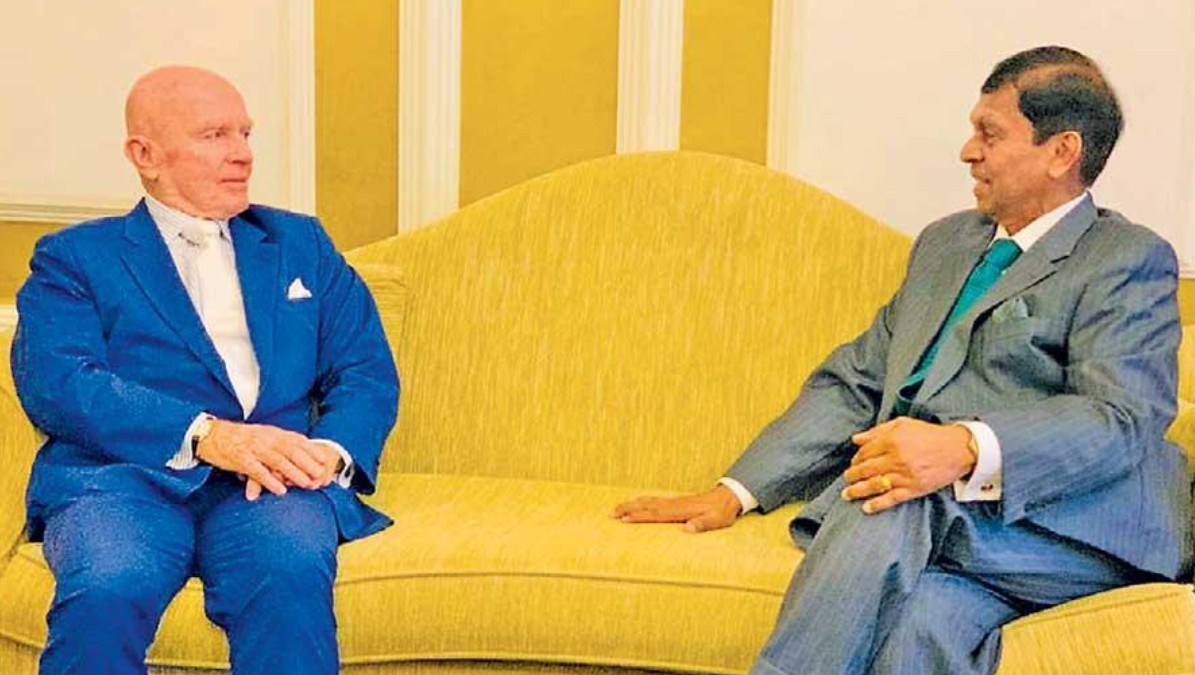
Mark Mobius, a renowned figure in the realm of emerging markets and a pivotal foreign investor in Sri Lanka’s government bonds following the end of the civil war, has passed away at the age of 89. His death was confirmed on Wednesday through a post on his LinkedIn profile, which did not provide details regarding the cause.
Recognized globally for his groundbreaking contributions to emerging markets, Mobius was more than just a fund manager for Sri Lanka. He was a key ally during a critical period for the nation, particularly in the fragile aftermath of its nearly three-decade-long civil conflict, which concluded in 2009. His investment activities through the Templeton Emerging Markets Group represented a significant endorsement of Sri Lanka’s financial landscape during a time of widespread skepticism.
Mobius had an eye for discovering new investment avenues, often in challenging markets. He famously stated, “Volatility is not an enemy to fear but a sign that opportunity is close at hand,” in his book “Passport to Profits.” This philosophy helped shape a generation of fund managers and attracted substantial investment into markets previously considered marginal.
In the wake of the civil war, as Sri Lanka faced economic challenges, Mobius played a critical role. The country had narrowly sidestepped a balance-of-payments crisis with a $2.6 billion Stand-By Arrangement from the International Monetary Fund (IMF). While the IMF deal established a safety net, Mobius’s investment provided a much-needed boost during a time when the country was under scrutiny for alleged human rights violations.
Under Mobius’s guidance, Templeton began to purchase Sri Lankan Treasury bonds aggressively, ultimately holding around $800 million in government securities at its peak. This investment was more than financial; it served as a lifeline for Sri Lanka when other foreign investors were hesitant to engage with the nation.
Mobius’s entry into the Sri Lankan bond market coincided with a surge of domestic optimism. He recognized the potential for a peace dividend through lucrative domestic debt, a perspective that others had overlooked. His extensive discussions with then-Central Bank Governor Ajith Nivard Cabraal were pivotal in building confidence in the country’s financial stability. Cabraal’s economic strategy focused on aggressive infrastructure development funded by foreign investment and maintaining a stable currency to bolster investor trust.
Mobius was often heard asserting that confidence, rather than just interest rates, underpinned currency stability. He was optimistic that with the war concluded and the IMF’s support in place, the Sri Lankan Rupee would remain stable, a sentiment reinforced by assurances from Central Bank leaders regarding exchange rate management.
Throughout his numerous visits to Sri Lanka, Mobius was a familiar figure, actively engaging with leading corporate entities such as John Keells Holdings. He did not limit his analysis to financial reports; instead, he emphasized the importance of observing the local environment. He noted the influx of Chinese-funded infrastructure projects and the evolving skyline as indicators of Sri Lanka’s potential as “the next big investment frontier.”
Mobius’s investment strategy in Sri Lanka was anchored in three critical areas: liquidity, foreign exchange policies, and currency trends. While he later expanded into private equity and investments in local blue-chip firms, his most lasting legacy in Sri Lanka will be associated with the government bonds he championed, demonstrating that a nation emerging from conflict could attract significant investment when the narrative of stability was effectively communicated.
Despite facing challenges in later years, particularly with the soft-peg policy that eventually came under strain, Mobius maintained an optimistic outlook on Sri Lanka’s prospects. Even amidst economic difficulties in the late 2010s, he returned to Colombo to advocate for interest rate reductions and the adoption of digitalization.
Mobius’s passing marks a significant moment in Sri Lankan finance history. He was instrumental in reshaping perceptions of Colombo from a war-ravaged region to a viable destination for substantial global capital. To the policymakers of 2009, he represented an invaluable partnership; to the investors who followed in his footsteps, he was a testament to the idea that high-risk bonds could yield considerable rewards for the bold.
As the executive chairman of Templeton Emerging Markets Group, where he dedicated over three decades, Mobius traveled extensively, visiting numerous countries in search of undervalued businesses and underappreciated economies. He claimed to have visited at least 112 nations throughout his career.
Born to Puerto Rican and German parents in Hempstead, New York, Mobius earned a Ph.D. in economics from MIT in 1964, focusing on communication satellites. His diverse career path included stints as a fine arts student, a talent agent, a teacher, and a marketer of Snoopy products in Asia, along with work as a political consultant.