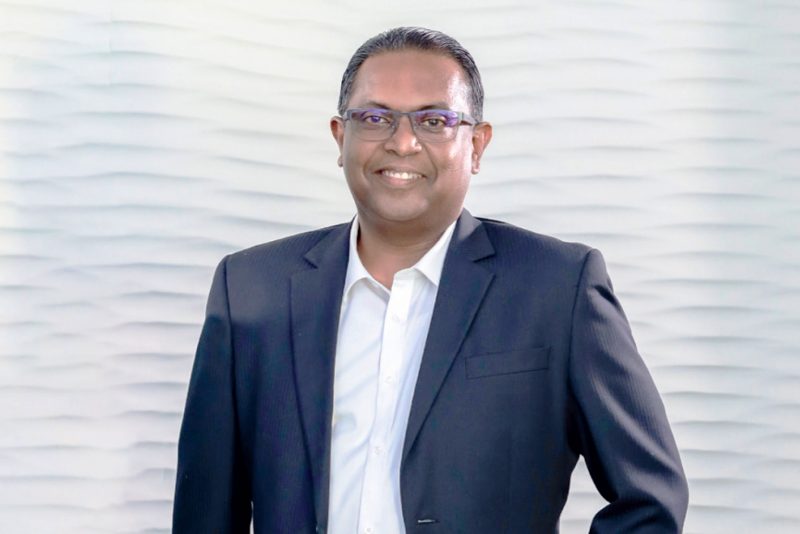
The inaugural Sri Lanka Fintech Summit 2025, recently held, marked a significant step towards shaping a modern, inclusive, and investment-ready digital economy in the country. More than just a conference, the event brought together policymakers, regulators, investors, and fintech leaders to outline industry priorities for the coming year. It also attracted numerous leading international and local fintech experts, investors, global fintech influencers, and startups, fulfilling a clear industry objective. A major requirement was to unite stakeholders such as banks, NBFIs, fintech companies, startups, and financial service providers to collaborate and enhance the ecosystem, a goal that was successfully achieved at the summit. “Our members wanted international experts to share knowledge, investors to see what we are building, startups to present their solutions, and youth to understand the future they will shape to fulfill a core objective of the association,” said Channa de Silva, Chairman of the Fintech Forum, Sri Lanka. “Most importantly, we needed to leave with concrete action points for the industry.”
The summit’s core featured a series of closed-door roundtables conducted through a guided framework, each focusing on a critical area of the fintech ecosystem. With participation from the Central Bank of Sri Lanka (CBSL), the Ministry of Digital Economy, Port City Colombo, and the Board of Investment (BOI), these sessions developed actionable frameworks and KPIs to guide future sectoral progress. “It was about defining KPIs, setting targets, assigning responsibilities, and giving the industry a shared direction,” de Silva explained.
Chaired by Damith Pallewatte, CEO of Hatton National Bank, the opening roundtable mapped out Sri Lanka’s Vision 2030 for digital banking. Participants advocated for a national cloud policy, a bank-fintech partnership framework, and progress towards a digital assets model, including CBDC research. Implementing and expanding the national digital ID for banking and payments was recognized as a key enabler of inclusion and innovation.
The second session, chaired by Channa de Silva, also the CEO of LankaPay, focused on fintech innovation and financial inclusion. The participants set a national goal to reduce the cash in circulation over GDP percentage from the current 4.5% to 3.5% within three years. The plan prioritizes targeting high-volume areas where physical cash is used, such as transport, utilities, and SME payments, while expanding digital access through agency banking via post offices and cooperatives. Participants also proposed a national trust and digital financial literacy campaign, urging the government to lead by example in digital payments adoption.
The third discussion, Regulatory Innovation – Sandbox 2.0, chaired by Dr. Ranee Jayamaha, former CBSL Deputy Governor, explored ways to remove bottlenecks in regulatory engagement and fast-track fintech approvals. The group urged CBSL to publish a formal definition of “fintech” and transparent guidelines, deciding to establish an interim multi-regulatory committee to collate common problems raised by fintech companies and present them to the authorities, discuss issues, and streamline approvals. In the long term, they agreed to lobby for a unified regulatory authority for fintech oversight.
The fourth roundtable, Harnessing Digital Assets and CBDCs, was chaired by Sandun Hapugoda, Country Manager for Mastercard Sri Lanka and the Maldives. It explored opportunities and challenges in digital assets, blockchain, and CBDC adoption. Participants agreed that the top priority is to clearly define regulatory responsibilities, as the Central Bank of Sri Lanka (CBSL), the Colombo Stock Exchange (CSE), and the Securities and Exchange Commission (SEC) each have potential roles in establishing the legal recognition and framework for digital assets. They agreed to identify viable blockchain use cases to promote and endorse the CBSL’s cautious approach to CBDCs, recommending continued research until a national use case emerges.
Chaired by Rajeeva Bandaranaike, former CEO of the Colombo Stock Exchange, the fifth session, titled “Market Access and International Partnerships,” focused on rebuilding investor confidence and repositioning Sri Lanka’s image through a unified narrative. Participants proposed a standing industry-government forum to address investment approval bottlenecks and advocate for policy consistency and tax simplification, which are conducive to investments.
They also discussed regional partnerships with venture funds, frontier market investment funds, and diaspora-linked venture studio models to channel new capital into Sri Lanka’s fintech ecosystem and support Lankan fintechs to expand into India and other neighboring markets.
The final session, chaired by Madu Ratnayake, Co-founder and President of Scybers, focused on cybersecurity and resilience. The participants agreed to create a Financial Sector Intelligence and Information-Sharing Framework under CBSL’s FinCSIRT and a Security Leadership Forum to coordinate responses to emerging threats.
They highlighted the urgent need for cybersecurity talent development, proposing cross-industry CISO training and regulatory pathways for IT and risk professionals. A nationwide fraud awareness campaign, adoption of a bank.lk domain, and fixed-prefix phone numbers were also recommended to protect citizens and build trust.
“This summit is not an end, but only a beginning, a space where the industry, regulators, and government stakeholders meet to shape the future together of the digital economy,” said de Silva. “We now have a strong foundation, but what matters is sustained collaboration and visible progress.” The Fintech Forum of Sri Lanka has long-term plans for the National Fintech Summit, in addition to making it an annual event, providing a continuing platform for policy dialogue, progress review, and the advancement of a trusted, inclusive digital financial ecosystem for the nation are the wider objectives.
Image Caption: Channa de Silva, Chairman of the Fintech Forum