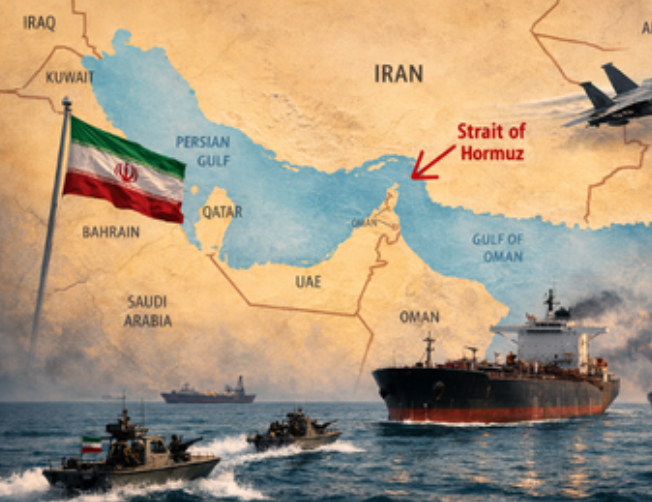
When missiles fly in the Gulf, the Strait of Hormuz becomes the world’s most nervous waterway.
Roughly 20% of global oil supply moves through that narrow corridor between Iran and Oman. It is not just a shipping lane. It is an artery. And when conflict escalates between Washington and Tehran, insurers, shipowners and energy traders respond before governments do.
The immediate impact is not necessarily closure. It is risk repricing.
Tanker traffic has not halted — but it has slowed. Some operators are pausing sailings. Others are rerouting where possible. Naval escorts are being discussed. Maritime security advisories have intensified. Electronic interference reports and GPS spoofing concerns are circulating again.
The bigger shock is financial.
War-risk insurance premia have jumped sharply.
Underwriters in London’s Lloyd’s market and other global hubs typically react within hours to escalation. Premiums that might sit at a fraction of cargo value can multiply several times over when a conflict risk is formally elevated.
For Very Large Crude Carriers (VLCCs), that can mean hundreds of thousands of dollars extra per voyage. Add higher freight rates. Add crew hazard allowances. Add potential delays.
Oil itself may not stop flowing.
But it becomes more expensive to move.
For import-dependent economies like Sri Lanka, this matters immediately. Higher tanker insurance feeds into freight. Freight feeds into landed crude cost. Landed cost feeds into domestic pricing or fiscal strain.
Markets are watching one question: will Iran attempt to disrupt Hormuz directly?
Even a temporary blockage would send Brent crude sharply higher. Even the threat keeps volatility elevated. The Strait is still open. But it is no longer calm.
And when Hormuz trembles, global trade recalculates pretty fast.