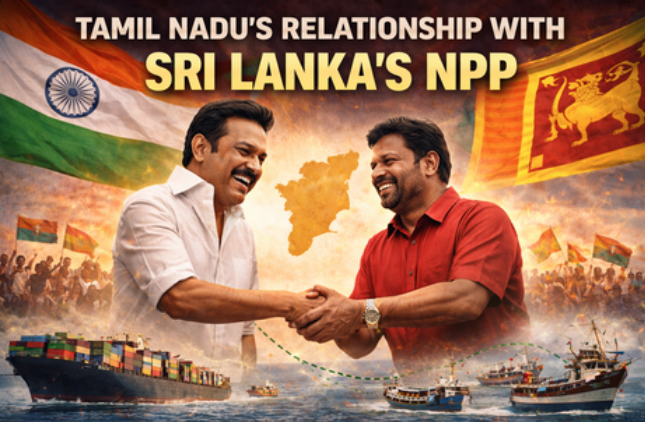
Chennai / Colombo: Tamil Nadu has always mattered to Delhi. But in this election cycle, it matters differently. Not as a state to win outright – but as a state to reshape perception.
For Narendra Modi, Tamil Nadu is not just electoral territory. It is the last major frontier where the Bharatiya Janata Party remains structurally constrained. Every additional vote share gained here is not merely arithmetic. It is symbolic. It signals that the BJP’s northern and western dominance can travel south – into a state built on linguistic identity, regional pride, and Dravidian political history.
That is why the BJP’s approach is not desperate. It is deliberate.
The party does not need to sweep Tamil Nadu. It needs to expand its footprint – incrementally, visibly, and permanently. Even a modest increase in vote share strengthens its national narrative. It tells investors, allies, and adversaries alike that the BJP is not geographically capped.
But Tamil Nadu is not easily absorbed.
This is a state where politics is not just about governance – it is about identity. The Dravidian model, with its emphasis on language, social justice, and regional autonomy, has created a political culture that resists central imposition. Delhi can influence. It cannot dictate.
And that is precisely where the second layer of this story emerges – Sri Lanka.
For the Anura Kumara Dissanayake-led NPP government, Tamil Nadu is not a distant political theatre. It is a strategic pressure point.
Be that as it may, no Sri Lankan government – past or present – has been able to fully ignore Tamil Nadu.
Why?
Because Tamil Nadu operates on two levels:
– Domestic politics within India
– Emotional and political linkage to Sri Lankan Tamils
When Tamil Nadu politics heats up, Sri Lanka inevitably enters the conversation – sometimes directly, often indirectly.
For Modi, managing Tamil Nadu means balancing three competing forces:
1. National security and strategic interests in the Indian Ocean
2. Domestic political messaging within Tamil Nadu
3. Diplomatic engagement with Colombo
That balancing act is delicate.
Too much overt alignment with Colombo risks backlash in Tamil Nadu.
Too much accommodation of Tamil Nadu sentiment risks complicating Delhi’s strategic posture.
For the NPP, the risk is not confrontation. It is misreading the moment.
The current government in Colombo may be tempted to view Delhi through a purely economic or strategic lens – IMF alignment, investment pipelines, energy cooperation.
But Tamil Nadu introduces a political variable that cannot be spreadsheeted.
If issues relating to:
– Sri Lankan Tamil rights
– Fishermen disputes
– Northern provincial governance
resurface during or after this election cycle, they can quickly become tools within Tamil Nadu’s domestic politics.
And once that happens, Delhi’s room to manoeuvre narrows.
There is also a deeper truth.
Tamil Nadu voters are sophisticated enough to separate state politics from foreign policy. But politicians are not always so restrained.
A speech in Chennai can become a headline in Jaffna.
A protest in Madurai can become a diplomatic irritant in Colombo.
That is the nature of proximity.
THE STRATEGIC TAKE
For Modi:
Tamil Nadu is about breaking a ceiling.
For NPP:
Tamil Nadu is about understanding a constraint.
One is trying to expand influence.
The other must learn where influence can be limited.
NEWSLINE-STYLE TRUTH
Be that as it may, elections in Tamil Nadu are not just about who forms the state government.
They shape how Delhi speaks – and how loudly Tamil Nadu is heard.
THE STING
Tamil Nadu may not decide Modi’s government. But it can decide how he deals with Sri Lanka.