In a country that measures its history in decades of conflict and compromise, omissions matter almost as much as declarations. Which is why the recent absence of any reference to the Ranaviru—the war veterans who bore the human cost of defeating the Liberation Tigers of Tamil Eelam (LTTE)—did not go unnoticed.
No medals were demanded.
No victory parades were expected.
But silence, when memory is owed, has a habit of sounding deliberate.
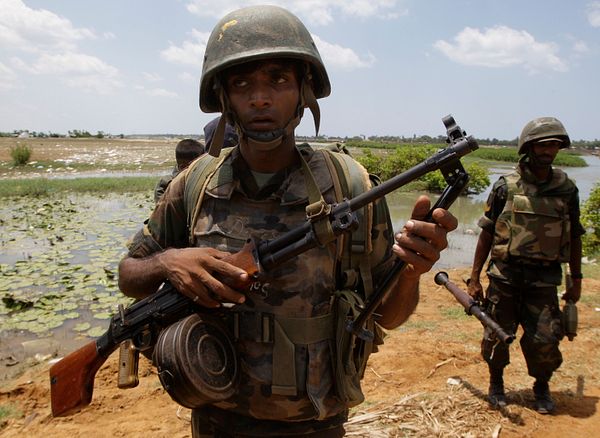
Let us be clear at the outset: recognising the Ranaviru is not an endorsement of war, nor a rejection of reconciliation. It is a recognition of fact. Whatever one’s political persuasion, it was the men and women in uniform—largely drawn from rural Sri Lanka—who fought, suffered, and died in the North and East, bringing an end to a conflict that bled the country for nearly three decades.
They did not draft policy.
They did not negotiate ceasefires.
They executed decisions taken far above their pay grade.
And they did so at extraordinary personal cost.
The government may argue—reasonably—that the moment called for restraint. That language had to be carefully balanced. That the future should not be held hostage to the past. All valid considerations. But balance does not require amnesia, and reconciliation is not advanced by selective remembrance.
There is a difference between avoiding chest-thumping and practising erasure.
What makes the omission more puzzling is that acknowledging the Ranaviru need not be triumphalist. One can honour service without glorifying violence; recognise sacrifice without reopening wounds. Many post- conflict societies manage this with some grace. The veterans are thanked—not weaponised. Remembered— not politicised.
Sri Lanka, unfortunately, has a habit of swinging between extremes: either the soldier is lionised beyond critique or quietly written out of the script altogether. Neither approach serves the country well.
For the veterans themselves—many of whom now navigate civilian life with injuries, trauma, or fading relevance—the absence stings not because they crave applause, but because recognition is often the only dividend they were promised. Not land. Not privilege. Just acknowledgement.
And here lies the irony. A state that wishes to project confidence, maturity, and moral clarity need not fear its own history. To thank those who fought the war is not to deny the suffering of others. Two truths can coexist—if the political will exists.
Perhaps this was an oversight. Perhaps it was a conscious choice. Either way, the message landed awkwardly: that the most consequential chapter of the country’s modern history can be alluded to without naming those who carried it on their backs.
That is not neutrality. It is discomfort masquerading as principle.
The Ranaviru do not need to be elevated above criticism, nor frozen in permanent reverence. But neither should they be edited out of the national narrative in the hope that time will do the work of memory for us.
History rarely forgives that kind of silence.
A confident nation can honour its veterans and pursue reconciliation. Forgetting one to appease the other is not balance—it is avoidance. And avoidance, as Sri Lanka knows too well, has always been the most expensive option of all.