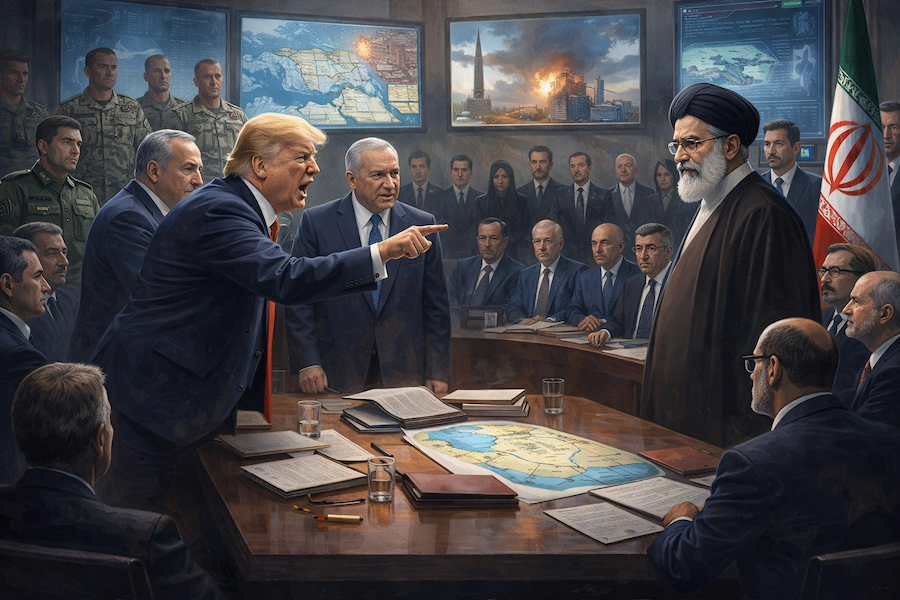
Be that as it may, comparisons in geopolitics must be handled with care — not because they are unnecessary, but because when used loosely, they obscure more than they reveal.
The temptation to liken USA–Israel negotiations to the figure of Shylock — demanding, exacting, unyielding — is, at first glance, rhetorically powerful.
But it is also flawed.
In Shakespeare’s *The Merchant of Venice*, Shylock is a caricature — a symbol shaped by grievance, isolation, and an insistence on contractual justice taken to its extreme. His demand is literal, personal, and absolute: a pound of flesh.
Modern statecraft is none of these things.
Negotiations between the United States and Israel are not driven by singular emotion or rigid contractualism. They are shaped by layered interests — security guarantees, regional stability, domestic politics, and global perception.
Israel’s position, particularly in times of conflict, is rooted in survival and deterrence. Its negotiating stance is often firm, sometimes uncompromising, but always framed within a broader calculus of national security.
The United States, meanwhile, plays a dual role — ally and moderator.
It must support Israel, while simultaneously managing escalation, regional alliances, and its own strategic interests in the Middle East.
This is not a negotiation defined by one party extracting a fixed demand.
It is a dynamic, often uneasy balancing act.
To reduce it to a Shylock-like paradigm risks oversimplification.
Because the reality is far more complex — and far more consequential.
These are negotiations where the stakes are not symbolic flesh, but real lives. Where compromise is not theatrical, but strategic. Where outcomes reverberate far beyond the negotiating table.
If there is a lesson to be drawn from Shakespeare, it is not in the caricature of Shylock, but in the warning embedded within the story itself — that justice without mercy can become destructive, and that rigid positions, when pushed to their limit, can unravel the very systems they seek to uphold.
In that sense, the comparison is not entirely without value.
But it must be understood for what it is — a metaphor, not a model.
And in geopolitics, mistaking one for the other is a luxury no nation can afford.
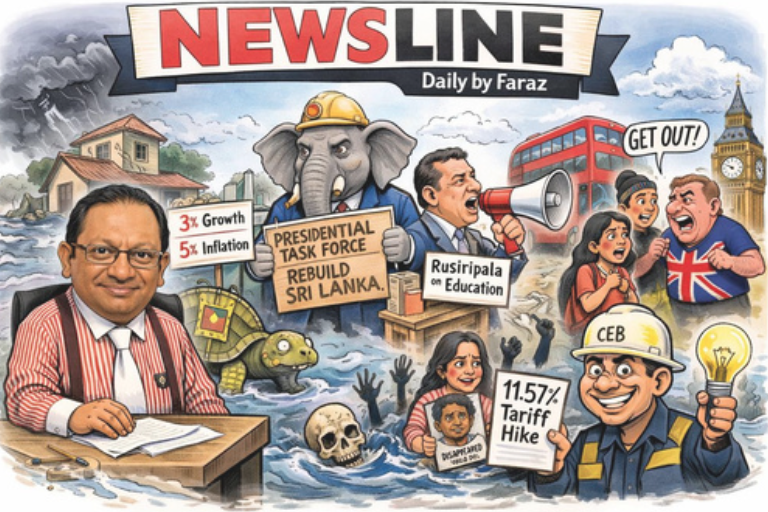
NEWSLINE – The Daily by Faraz: Questioning the Answers.
USA/ISRAEL Negotiations – THE SHYLOCK PARALLEL